
Jaribio lijalo kwa Nvidia: je, matumizi katika akili bandia yanaweza kusukuma hisa juu?

Ndiyo: matumizi endelevu katika akili bandia yanaweza kusukuma hisa za Nvidia juu, lakini faida rahisi huenda zimepitwa na wakati, kulingana na wachambuzi. Hatua inayofuata inategemea kidogo uvumi wa vyombo vya habari na zaidi ikiwa watoa huduma wakuu wa wingu wataendelea kuwekeza mtaji kwa kiwango kikubwa, na ikiwa Nvidia itaweza kutetea viwango vyake vya faida kadiri ushindani unavyoongezeka.
Suala hili liliibuka wiki hii baada ya hisa za Nvidia kupanda kwa kasi, na ongezeko la zaidi ya 8% katika kikao kimoja. Kichocheo hakikuwa faida za Nvidia yenyewe, bali utabiri wa Amazon wa matumizi ya mtaji unaokaribia dola bilioni 200 kwa mwaka 2025, ambapo sehemu kubwa imetengwa kwa ajili ya miundombinu ya akili bandia. Kwa wawekezaji, ilikuwa ukumbusho kwamba ujenzi wa akili bandia bado ni halisi sana, hata wakati tathmini zikiwa chini ya uchunguzi mkali zaidi.
Nini kinasukuma Nvidia sasa?
Miongozo ya matumizi ya Amazon ilikuja wakati muhimu kwa Nvidia. Mapema wiki hii, hisa ilikuwa chini ya shinikizo huku wawekezaji wakitathmini upya tathmini za juu za teknolojia kufuatia uuzaji mkubwa wa jumla. Utabiri wa Amazon ulibadilisha udhaifu huo.
Mpango wa matumizi ya mtaji wa dola bilioni 200 hauonyeshi tahadhari; unaonyesha kuongeza kasi. Nvidia inaendelea kuwa mtoa huduma mkuu wa vitengo vya usindikaji wa picha vya utendaji wa juu vinavyowezesha vituo vikubwa vya data vya akili bandia, na kuifanya kuwa mnufaika wa moja kwa moja wa matumizi haya.
Mwitikio wa soko ulifichua wapi imani ya kweli ya wawekezaji ipo. Hisa za Amazon zilishuka kutokana na matokeo ya kukatisha tamaa, huku Nvidia ikipaa. Tofauti hii inaangazia nafasi ya kipekee ya Nvidia katika mfumo wa ikolojia wa akili bandia. Mahitaji ya kompyuta si ya kinadharia au ya baadaye tena. Sasa ni sehemu ya bajeti za sasa, mikataba ya miaka mingi na maamuzi ya kimkakati ya miundombinu ambayo ni vigumu kuyabadilisha mara tu yanapokubaliwa.
Kwa nini hii ni muhimu kwa tathmini ya Nvidia
Tathmini ya Nvidia imekuwa uwanja mkuu wa vita. Tangu kuzinduliwa kwa ChatGPT mwishoni mwa 2022, Nvidia imewasilisha matokeo yanayozidi matarajio robo baada ya robo, yakichochewa na mahitaji makubwa ya akili bandia. Mafanikio haya yamepeleka hisa kwenye portfolios nyingi za taasisi na watu binafsi, na kuacha mtaji mpya mchache kando ili kusukuma hisa juu moja kwa moja.
Mkurugenzi Mtendaji Jensen Huang alishughulikia mvutano huu moja kwa moja, akiita kushuka kwa hivi karibuni kwa hisa za teknolojia kama "kuzorota kusiko na mantiki". Na ingawa kauli kama hizo kwa asili zinaonyesha matumaini ya kitaasisi, maoni ya Huang daima yamekuwa na uzito katika masoko. Wawekezaji wanaonekana kutafsiri msimamo wake kama ishara kwamba tathmini za sasa bado zinaonyesha nguvu halisi ya faida, na si tu uvumi uliopitiliza.
Athari katika mandhari ya akili bandia na semiconductors
Kupanda kwa Nvidia kuna athari zinazoenda zaidi ya hisa moja. Kunaimarisha wazo kwamba matumizi katika akili bandia yanazidi kujikita miongoni mwa kundi dogo la wanunuzi wakubwa, badala ya kutoweka kabisa. Amazon, Microsoft na Google hazipunguzi bajeti zao za akili bandia, bali zinazipanua.
Kwa sekta ya semiconductors, mkusanyiko huu unainufaisha Nvidia. Faida yake ya ushindani inaenda zaidi ya vifaa na inajumuisha programu, mitandao na mazingira ya watengenezaji, jambo ambalo hufanya gharama za kubadili kuwa juu. Ingawa AMD na Broadcom zinapiga hatua fulani, jukwaa lililounganishwa la Nvidia bado ni gumu kuliiga kwa kiwango kikubwa. Kujitenga huku kunaipa Nvidia nguvu kubwa zaidi ya kupanga bei kuliko washindani wake wengi, angalau kwa muda mfupi.
Utabiri wa wataalam: wapi lilipo jaribio la kweli
Sasa macho yote yanaelekezwa kwenye matokeo yajayo ya Nvidia mnamo Februari 25. Goldman Sachs inatarajia kampuni hiyo kuzidi mapato kwa takriban dola bilioni 2 kwa robo ya nne ya fedha, na mapato yanayotarajiwa ya dola bilioni 67.3 na faida juu ya makubaliano. Benki hiyo pia inatabiri kuwa Nvidia itazidi makadirio ya soko kwa robo inayofuata.
Hata hivyo, Goldman ilichukua msimamo wa tahadhari. Huku matarajio yakiwa tayari juu, umakini wa wawekezaji unaweza kuhama kutoka matokeo ya muda mfupi hadi miongozo ya Nvidia kwa 2026 na 2027. Kwa maneno mengine, soko halivutiwi tena sana na jinsi mahitaji ya akili bandia yalivyokuwa na nguvu huko nyuma, bali katika uwezo wa Nvidia kudumisha ukuaji bila viwango vya faida kumomonyoka kadiri ushindani unavyoongezeka.
Hitimisho kuu
Matumizi katika akili bandia bado yanaweza kuisukuma Nvidia juu, lakini uvumilivu wa soko kwa kukatishwa tamaa unapungua. Mpango wa matumizi ya mtaji wa dola bilioni 200 wa Amazon ulithibitisha jukumu kuu la Nvidia katika uchumi wa akili bandia, ukiunga mkono matumaini ya muda mfupi. Hata hivyo, hatua inayofuata ya hisa itategemea kidogo vichwa vya habari kuhusu mahitaji na zaidi miongozo ya muda mrefu na uthabiti wa viwango vya faida. Jaribio kwa Nvidia si tena ikiwa akili bandia ni halisi, bali ikiwa utawala unaweza kudumishwa.
Mtazamo wa kiufundi wa Nvidia
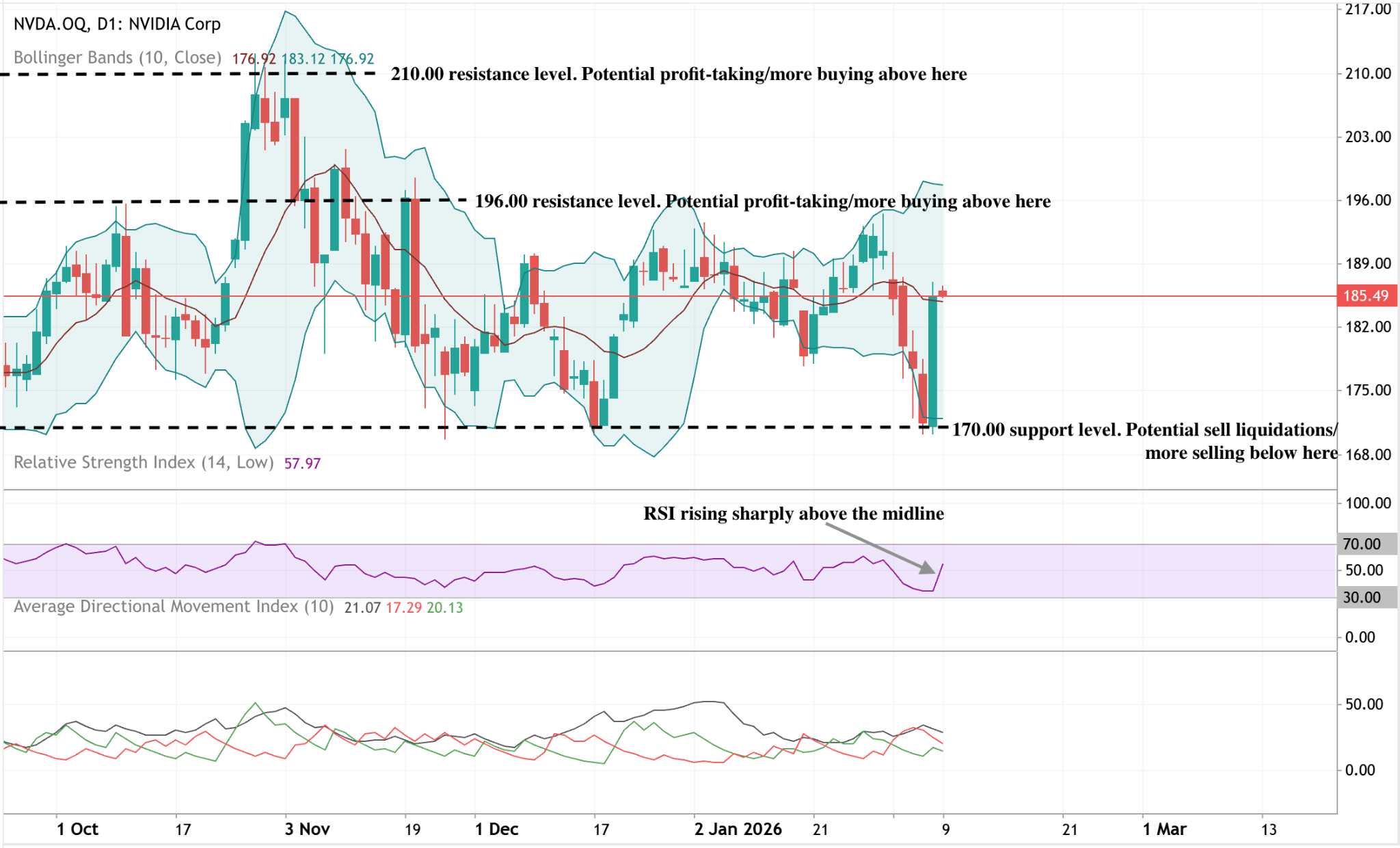
NVIDIA inaendelea kufanya biashara ndani ya anuwai pana ya uimarishaji kufuatia hali ya kubadilikabadilika ya awali, huku bei ikiyumbayumba kati ya usaidizi karibu na dola 170 na kanda za juu karibu na dola 196 na 210.
Bollinger Bands zinaonyesha upanuzi wa wastani ikilinganishwa na mgandamizo wa awali, jambo linaloonyesha ongezeko la hali ya kubadilikabadilika bila mwendo endelevu wa mwelekeo. Viashiria vya kasi vinaonyesha kurudi nyuma kwa muda mfupi, na ongezeko kubwa la RSI juu ya mstari wa kati kufuatia kushuka kwa hivi karibuni, kuonyesha kupona kutoka kwa hali dhaifu na si kuongeza kasi kwa mwelekeo. Nguvu ya mwelekeo inaendelea kuwa dhaifu, kwani usomaji wa ADX unasalia kuwa chini kiasi, kuonyesha utawala mdogo wa mwelekeo.
Utendaji uliotajwa hauhakikishi matokeo ya baadaye.


