
Silver smashes past $90: Why the trend may be just beginning

Silver has achieved more than just setting a new record, according to analysts. By surging past $90 per ounce for the first time in history, the metal has prompted markets to reassess whether this is merely a momentum surge or the early phase of a deeper, structural trend. Prices are already up more than 25% in 2026, pushing silver’s market capitalisation above $5 trillion and restoring its relevance across both macro and industrial narratives.
What makes this breakout stand out is the backdrop. Softer core inflation, rising expectations of Federal Reserve rate cuts, tightening physical supply, and growing geopolitical uncertainty are all reinforcing one another. When those forces align, silver rarely tops out quietly. The more important question now is not how silver reached $90, but whether the conditions driving it are strong enough to carry prices further.
What’s driving Silver?
The immediate macro trigger came from U.S. inflation data that kept the disinflation narrative alive where it matters most. The Core CPI rose just 0.2% month-on-month and 2.6% year-on-year in December, slightly softer than expected, prompting markets to lean back into the idea that policy easing remains on the table in 2026.
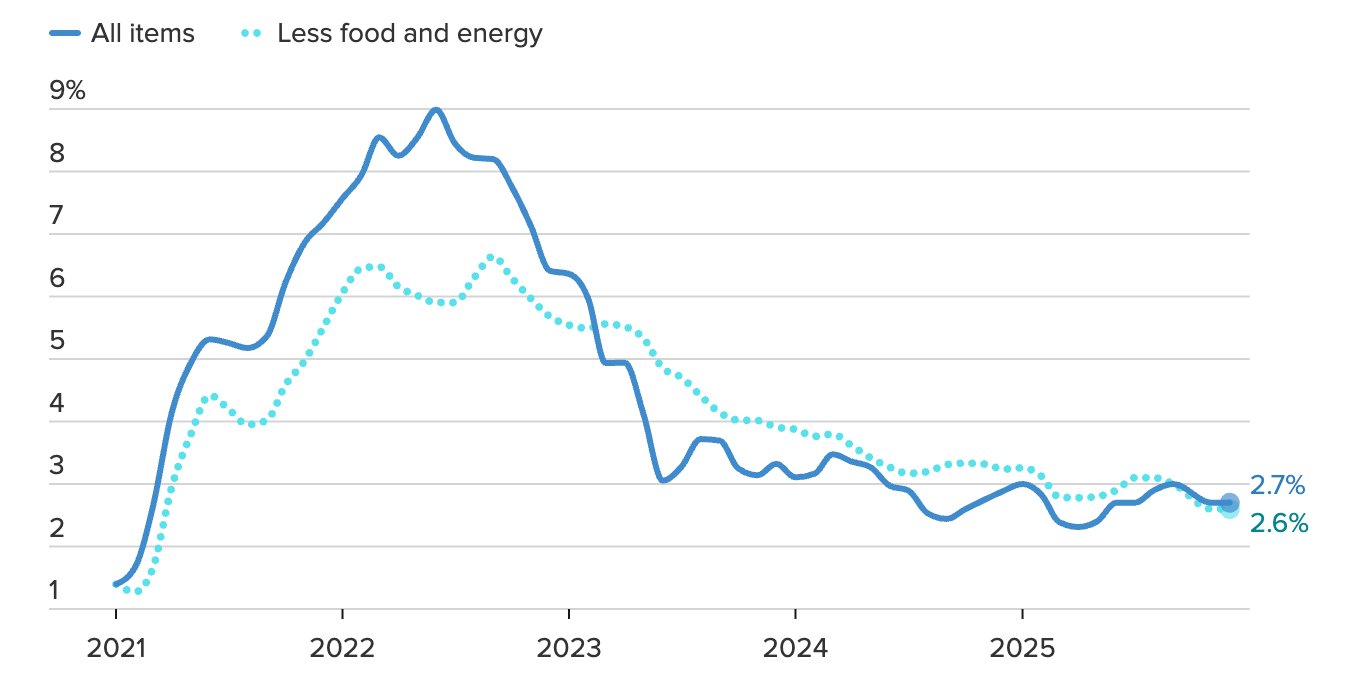
Rate futures now price two Federal Reserve cuts this year, with growing conviction that easing could begin by mid-year.
That matters because silver, like gold, does not offer yield. When real yields fall, and cash becomes less attractive, the opportunity cost of holding precious metals drops sharply. A softer dollar adds another layer of support, pushing dollar-denominated commodities higher. Gold reacted first, breaking above $4,630, but silver followed with greater force as momentum funds and short-term traders accelerated the move through the psychologically important $90 level.
Geopolitics has injected a fresh layer of urgency into the rally. Escalating tensions involving Iran, alongside renewed criticism of the Federal Reserve’s independence from former US President Donald Trump, have triggered aggressive safe-haven flows into precious metals (Source: Reuters, January 2026).
During the Asian trading session, silver volumes surged to more than 14 times the daily average, while prices jumped over 7% intraday, a pattern consistent with institutional rotation rather than retail speculation, according to analysts.
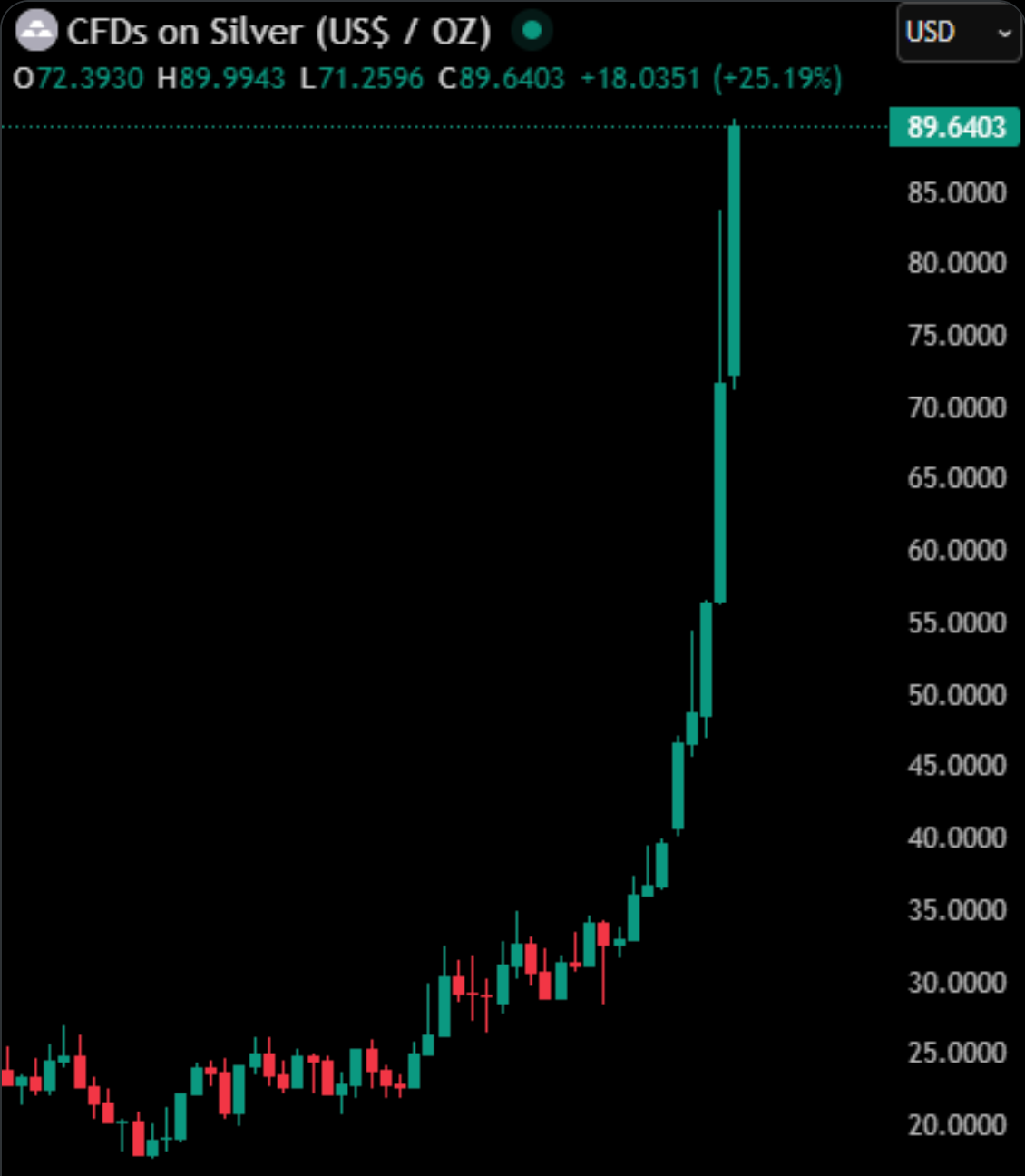
Silver’s dual role as both a monetary hedge and an industrial input tends to amplify these moves relative to gold when political uncertainty spikes.
Why it matters
Silver’s rally is not just an inflation hedge. It reflects a broader shift in investor behaviour as confidence in policy predictability weakens. Political pressure on central banks, rising fiscal concerns, and ongoing geopolitical tensions have revived demand for assets that sit outside the financial system. Silver benefits from that shift, particularly when investors seek alternatives beyond gold.
What differentiates the current move is that safe-haven demand is colliding with structural scarcity. BMI Research forecasts that the global silver market deficit will persist through at least 2026, driven by strong investment inflows, robust industrial demand, and constrained supply growth. Unlike gold, silver lacks deep above-ground inventories that can easily absorb shocks. When demand accelerates unexpectedly, price adjustments tend to be swift and outsized.
This interaction helps explain why silver has outperformed gold during the rally. Analysts often describe silver as behaving like “gold on leverage” during periods of macro stress. When monetary uncertainty and physical tightness coexist, silver rarely moves quietly or briefly.
Impact on industry and markets
Rising silver prices are already being felt in industrial supply chains. Solar panel manufacturers, EV producers, and technology firms rely heavily on silver for conductivity and efficiency. The International Energy Agency estimates that global solar capacity could quadruple by 2030, potentially consuming nearly half of the annual silver output if current technologies remain dominant.
Financial markets are responding in parallel. Investment demand has surged, with silver ETFs seeing renewed inflows as investors seek exposure to both the metal’s macro hedge and its industrial growth story.
The World Gold Council estimates that physically backed precious-metal ETFs attracted $89 billion in inflows during 2025, the largest annual total on record. These flows tend to dampen downside volatility by providing a steady base of longer-term demand.
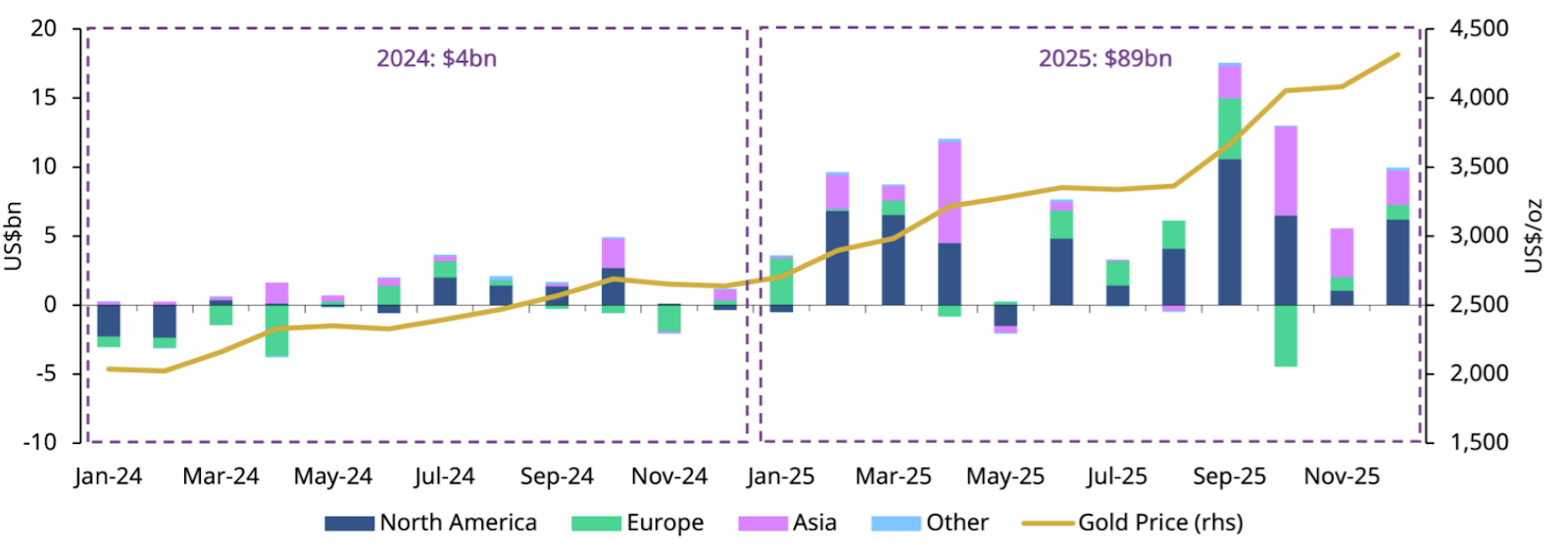
For consumers, the impact is less immediate but still meaningful. Higher silver prices increase production costs across renewable energy, electronics, and data infrastructure, reinforcing the inflationary pressures that initially drew investors to precious metals.
Expert outlook
The outlook for silver remains constructive, although volatility is expected. Silver has a long history of overshooting during momentum phases, often followed by sharp but temporary pullbacks. Those retracements, however, do not necessarily signal trend exhaustion when real yields remain under pressure and supply deficits persist.
Institutional forecasts are becoming increasingly assertive. Citigroup recently projected that silver could approach $100 per ounce within the next three months, alongside a gold target near $5,000, citing falling real yields, strong investment demand, and persistent supply constraints. With silver now trading within 10% of that level, such targets are no longer abstract and are actively drawing momentum and trend-following capital.
The key signals to watch are inflation trends, central bank communication, and labour market data. Any sustained re-acceleration in core inflation could delay rate cuts and trigger consolidation. Conversely, confirmation that disinflation is intact would strengthen the case for further upside. As long as uncertainty around growth, policy, and geopolitics remains elevated, silver’s role as both a defensive asset and an industrial input keeps the longer-term trend firmly in play.
Key takeaway
Silver’s move above $90 is more than a milestone. It reflects a convergence of softer inflation, rising rate-cut expectations, persistent supply shortages, and renewed demand for real assets. While volatility is inevitable, the forces behind the rally remain firmly in place. The next phase will depend less on headlines and more on whether macro conditions continue to erode confidence in cash and bonds.
Silver technical outlook
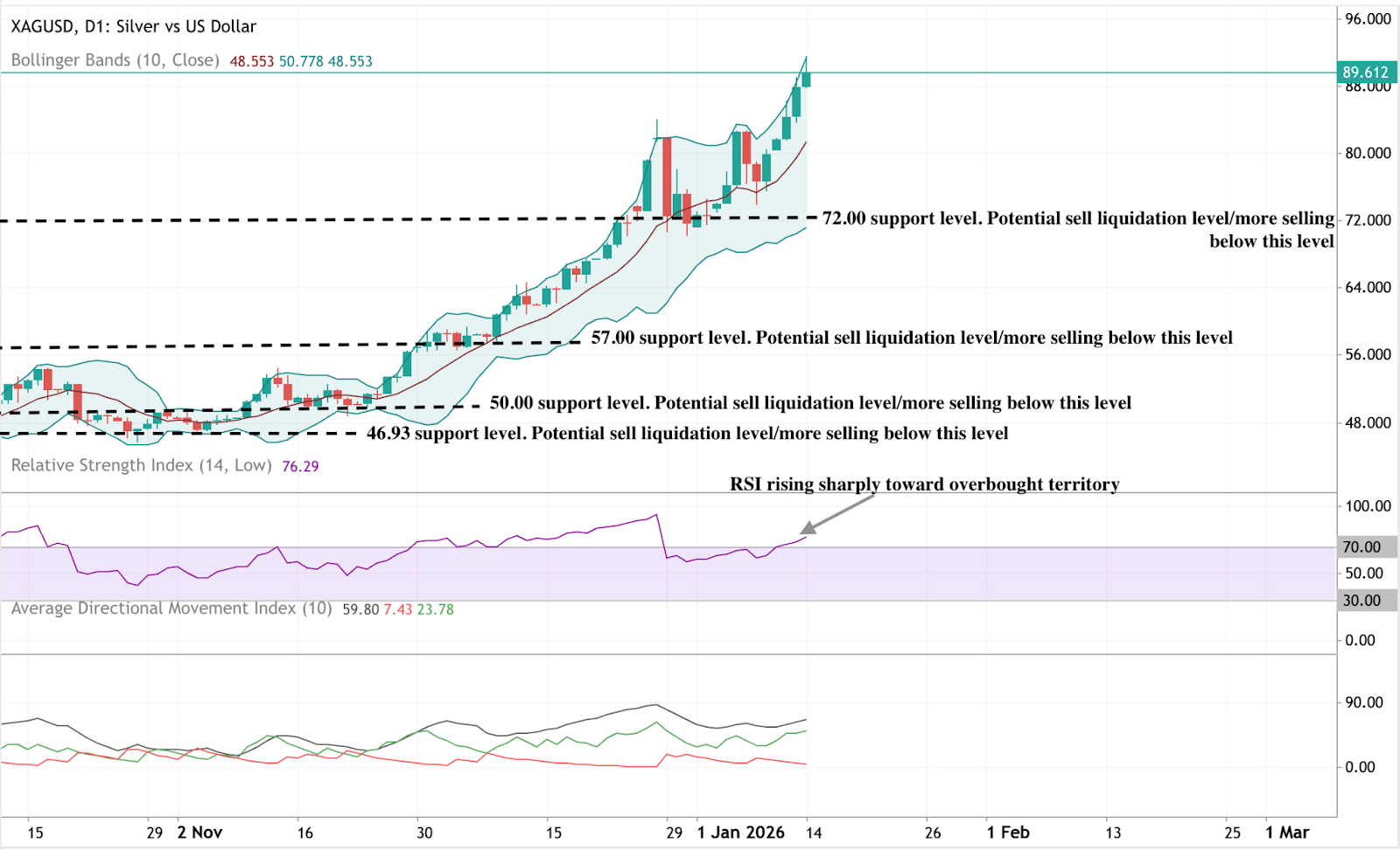
Silver is testing the prior swing high near $90.93, placing the market in price discovery mode close to an all-time high. At this stage, the move is extension-driven rather than retracement-driven, limiting the usefulness of Fibonacci levels.
The 78.6% retracement at $77.53 represents the first meaningful structural support; however, at approximately 14.5% below current prices, it remains too distant to guide near-term positioning.
Momentum signals point to late-stage trend conditions. RSI readings across multiple timeframes are firmly overbought, with short-term momentum more stretched than the broader trend. A moderate bearish divergence is emerging as price pushes higher while momentum begins to roll over - a common warning sign in commodities ahead of sharp consolidation or reversal.
Trend strength remains intact, with ADX confirming a strong uptrend, but extreme volume at new highs raises the risk of a blow-off move rather than a sustained breakout.
Upside follow-through requires sustained closes above the recent high with momentum holding firm. Failure to hold gains, fading volume, or a close back below the breakout zone would confirm exhaustion and shift focus toward consolidation or reversal.
The performance figures quoted are not a guarantee of future performance. The future performance figures quoted are only estimates and may not be a reliable indicator of future performance.


