
Will silver’s surge last as markets brace for the Fed rate decision?

According to analysts, silver’s surge can continue, but only if the Federal Reserve delivers the rate cut markets expect this week. The metal’s climb to around $60.79 an ounce reflects traders pricing in an 87% probability of a quarter-point reduction, and several commodity strategists argue that further easing would keep silver supported in the near term. Others caution that the rally may fade quickly if the Fed signals a slower path of cuts, making the current level vulnerable to a pullback.
Their split views frame the central question ahead of the meeting: is silver’s momentum genuine or merely a product of aggressive positioning? Years of supply tightness and tariff concerns strengthen the bullish camp, while October’s liquidity shock underscores how fragile the market can become under stress. Analysts agree on one point - the Fed’s tone this week is likely to decide whether silver extends its breakout or stalls beneath recent highs.
What’s driving silver’s rise?
The core engine of silver’s advance is the firm belief that the Federal Reserve will extend its easing cycle. Traders are pricing in an 87% chance of a quarter-point cut, taking rates towards 3.5%–3.75%, according to CME’s FedWatch tool.
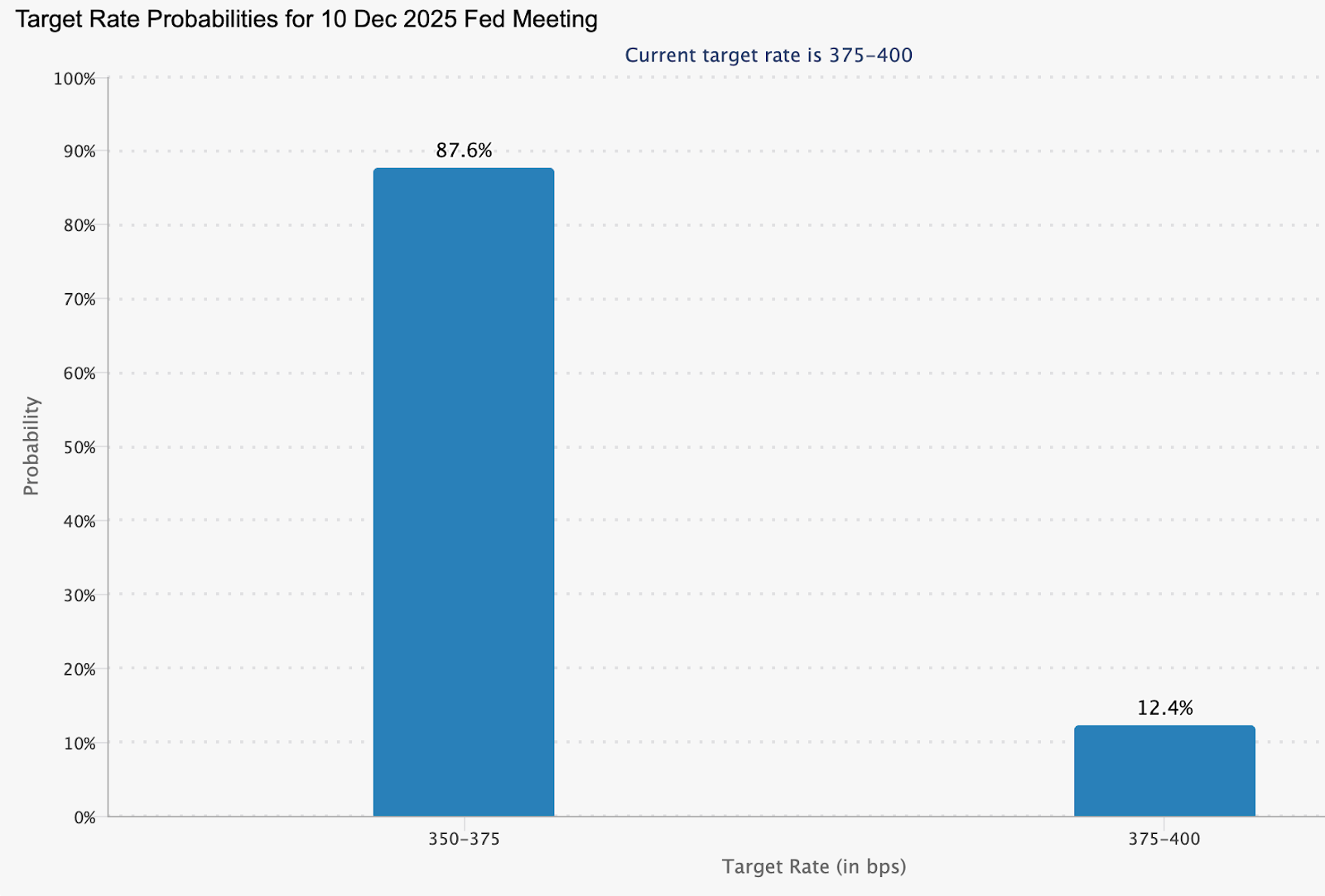
A softer dollar - already 8.5% lower this year - has strengthened the appeal of non-yielding assets. Rhona O’Connell of StoneX summed up the sentiment by saying traders “were definitely looking for cuts,” helping to pull forward positioning even before the meeting concluded.
But macro policy is only part of the story. Silver’s physical market has spent months in a state of dislocation. London inventories were squeezed so tightly in October that one major investment chief described conditions as “entirely unprecedented”, with “no liquidity available” as surging Indian demand and ETF inflows drained supplies.
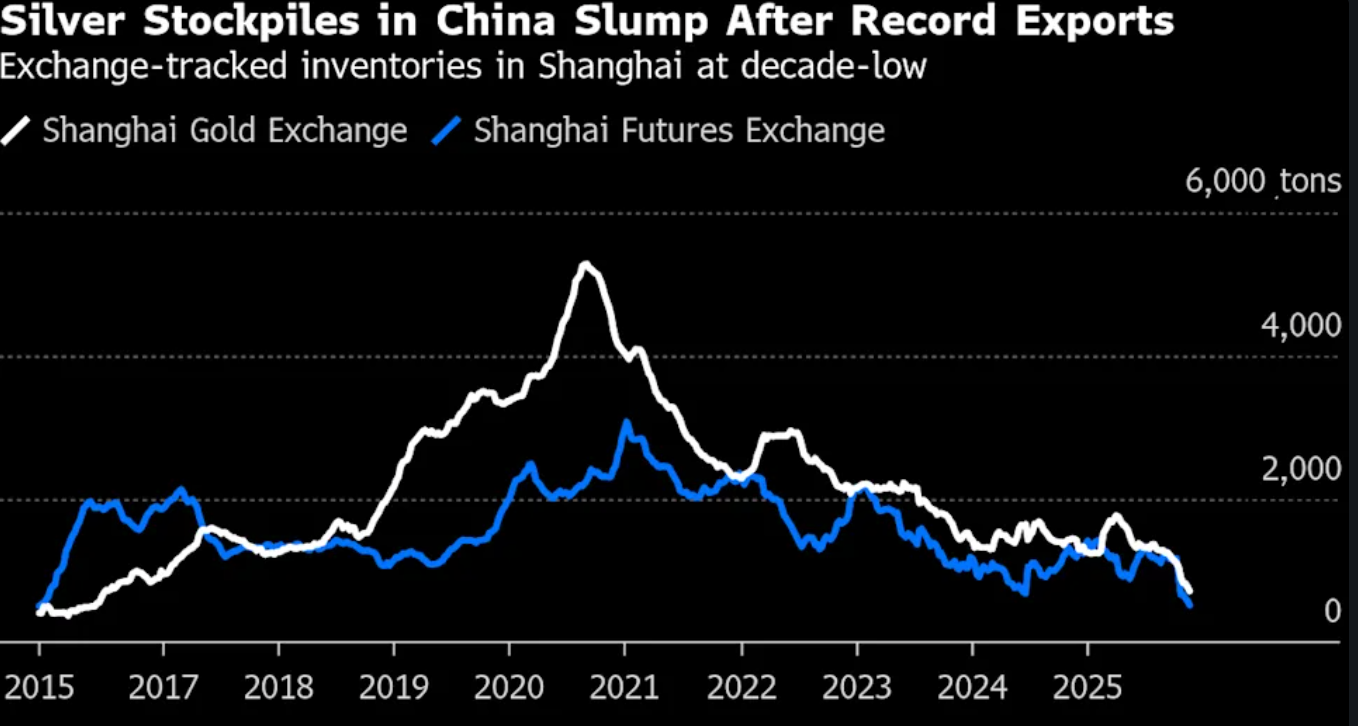
Stocks have recovered slightly, with London’s free-floating inventories reaching around 202 million ounces in November, yet the improvement is uneven. Chinese inventories remain at decade lows, while the United States has amassed an oversized Comex stockpile of 456 million ounces due to tariff concerns after silver’s addition to the US critical minerals list.
Why it matters
According to analysts, this rally represents more than speculative enthusiasm; it highlights the fragility of the silver market, which has become evident after years of underinvestment. Because silver is primarily a by-product of other metals, miners cannot quickly scale production even when prices surge.
Helen Amos at BMO warned that “regional tightness” is likely to persist, pointing to chronic deficits that have accumulated over the past five years. Shortfalls are no longer isolated events - they are structural.
For investors, the divergence between gold and silver adds another layer of complexity. Gold has risen by about 60% this year, supported by central bank purchases and ETF inflows. However, analysts at BMI warn that any hint of a pause in Fed cuts may push gold back below $4,000. Silver, meanwhile, offers sharper upside but carries more volatility. As Goldman Sachs noted earlier in the year, silver still faces “more downside price risk” than gold due to its thinner market and heavier industrial footprint.
Impact on markets and industry
Manufacturers are already confronting the consequences of a metal that behaves more like a risk asset than a stable industrial input. Silver demand from the solar and electronics sectors continues to rise, meaning that price swings directly impact planning costs. Volatility complicates procurement, especially in solar production, where long-term commitments collide with fluctuating spot markets. Some producers are hedging more aggressively; others are absorbing higher costs until the market stabilises.
Financial markets are adjusting too. October’s freeze in the over-the-counter market - where buyers and sellers struggled to transact - sent a warning about liquidity risk. Dan Ghali at TD Securities said the tightness reflected “frictions to arbitrage”, made worse by tariff uncertainty and uneven regional stocks. The episode amplified intraday price swings and left traders acutely aware of how thin conditions can become when sentiment shifts.
As retail investors pile in, particularly in North America, where silver is marketed as the “poor man’s gold”, the market’s personality becomes even harder to read. Retail participation tends to amplify momentum in both directions, raising the stakes for what happens after the Fed decision.
Expert outlook
Analysts are split on whether silver’s surge marks the start of a sustained trend or the peak of a stretched market. Standard Chartered’s Suki Cooper maintains a constructive view, noting that prices could remain elevated while the physical market is tight. Yet she warns that volatility is here to stay, especially as traders focus on the US Section 232 review, which could introduce tariffs and deepen regional imbalances.
Forecasts range from silver extending its climb well beyond $61 to a pullback if the Fed softens its easing guidance. Some expect a continuation of the rally if the dollar weakens further, while others highlight the risk that even a modestly hawkish tone could trigger a rapid unwind of leveraged positions. The next phase hinges on three signals: the Fed’s forward guidance, the release of the critical minerals review, and fresh data on Chinese and London stock levels. Each carries the potential to reshape market sentiment within hours.
Key takeaway
Silver’s surge above $60 is the product of a rare convergence of monetary easing, structural shortages, and tariff uncertainty. The rally reflects genuine supply stress, but also a market prone to sudden air pockets when liquidity thins. With the Federal Reserve set to deliver its next rate decision, the stakes are high: the outcome could extend silver’s breakout or mark the moment momentum finally cools. The signals to watch next are the Fed’s guidance, the US minerals review, and fresh stock data from China and London.
Silver technical insights
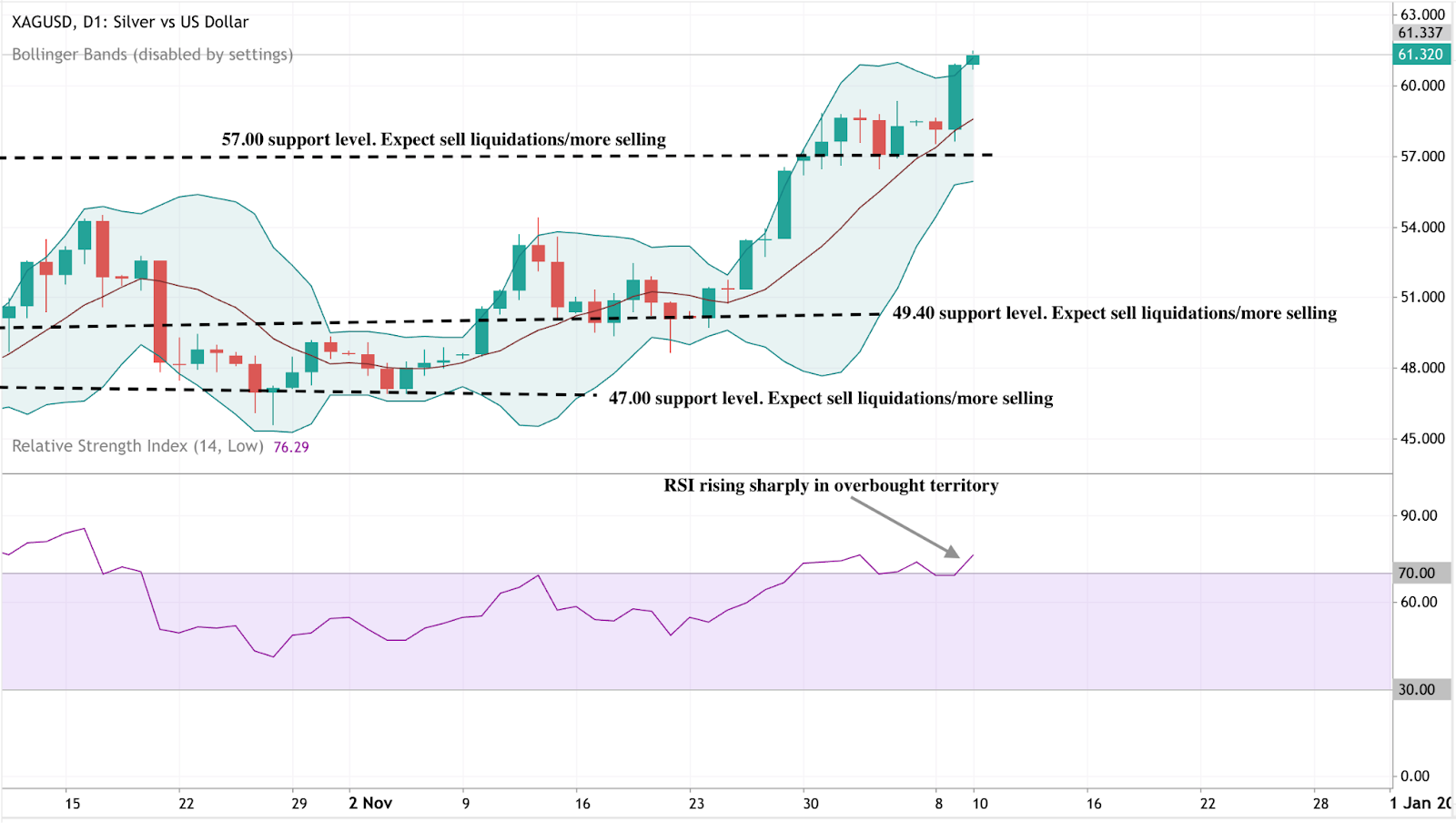
At the start of writing, Silver (XAG/USD) is trading around $61.32, extending a strong upward rally and now sitting well above the key $57.00 support level. A pullback toward this zone could trigger sell liquidations, while deeper declines toward $49.40 or $47.00 would suggest a broader reversal. For now, silver remains firmly bullish, riding the upper region of its Bollinger Band structure as momentum continues to build.
Price action continues to print higher highs and higher lows, signalling strong buyer control. Even so, recent candles are beginning to show minor hesitation near the current highs, hinting that the market may soon test buyer conviction after such a rapid climb. With volatility elevated and intraday ranges expanding, many traders are turning to tools such as the Deriv Trading Calculator to model their position size and potential exposure before engaging with these sharp swings.
The RSI, now around 76, is rising sharply within overbought territory, reflecting strong bullish momentum but also signalling that the market may be stretched in the short term. While the broader trend remains upward, silver could be vulnerable to a cooling-off phase unless bulls maintain pressure above current levels. A brief consolidation would not break the uptrend, but it would help reset momentum indicators and offer clearer entry signals for trend followers monitoring XAG/USD on Deriv MT5.
The performance figures quoted are not a guarantee of future performance.


