
NFP data signals a cooling US labour market: What comes next?

According to analysts, what comes next is not a sharp economic break, but a slower and more policy-driven phase for markets. November’s Non-Farm Payrolls report showed the US economy added 64,000 jobs, modestly beating expectations, while the unemployment rate climbed to 4.6%, its highest level since 2021. Hiring is still expanding, but the momentum that defined the post-pandemic recovery is clearly fading.
For investors, that combination changes the conversation. A cooling labour market eases inflation pressure without triggering recession fears, allowing the Federal Reserve greater flexibility in shaping its next move. The focus is now shifting away from whether the slowdown is real and towards how quickly monetary policy will respond.
What’s driving the labour market slowdown?
The softer tone in November’s NFP data is the result of gradual adjustment rather than sudden weakness. Job creation remains positive, but revisions to earlier months have reshaped the trend. September payrolls were revised down by 33,000 jobs, while October showed a loss of 105,000 roles, distorted by the recent US government shutdown that disrupted hiring and data collection.
Wage growth adds to the picture of easing pressure. Average hourly earnings rose just 0.1% month-on-month, undershooting forecasts, while annual wage growth slowed to 3.5% from 3.7%.
That deceleration matters for policymakers. A labour market that cools through slower hiring and moderating wages, rather than rising layoffs, is exactly the outcome the Federal Reserve has been aiming for.
Why it matters
For the Federal Reserve, November’s NFP report restores visibility after weeks of uncertainty caused by the shutdown. Fed officials, including New York Fed President John Williams, have repeatedly pointed to signs of gradual labour market rebalancing, and the latest data aligns with that assessment.
Market pricing has responded accordingly. Futures now imply roughly 58 basis points of rate cuts in 2026, well above the 25-basis-point guidance signalled in last week’s Fed projections. Analysts at Sucden Financial described the report as “consistent with a controlled slowdown rather than an outright contraction,” a scenario that allows policy easing without the urgency of crisis response.
Impact on markets and assets
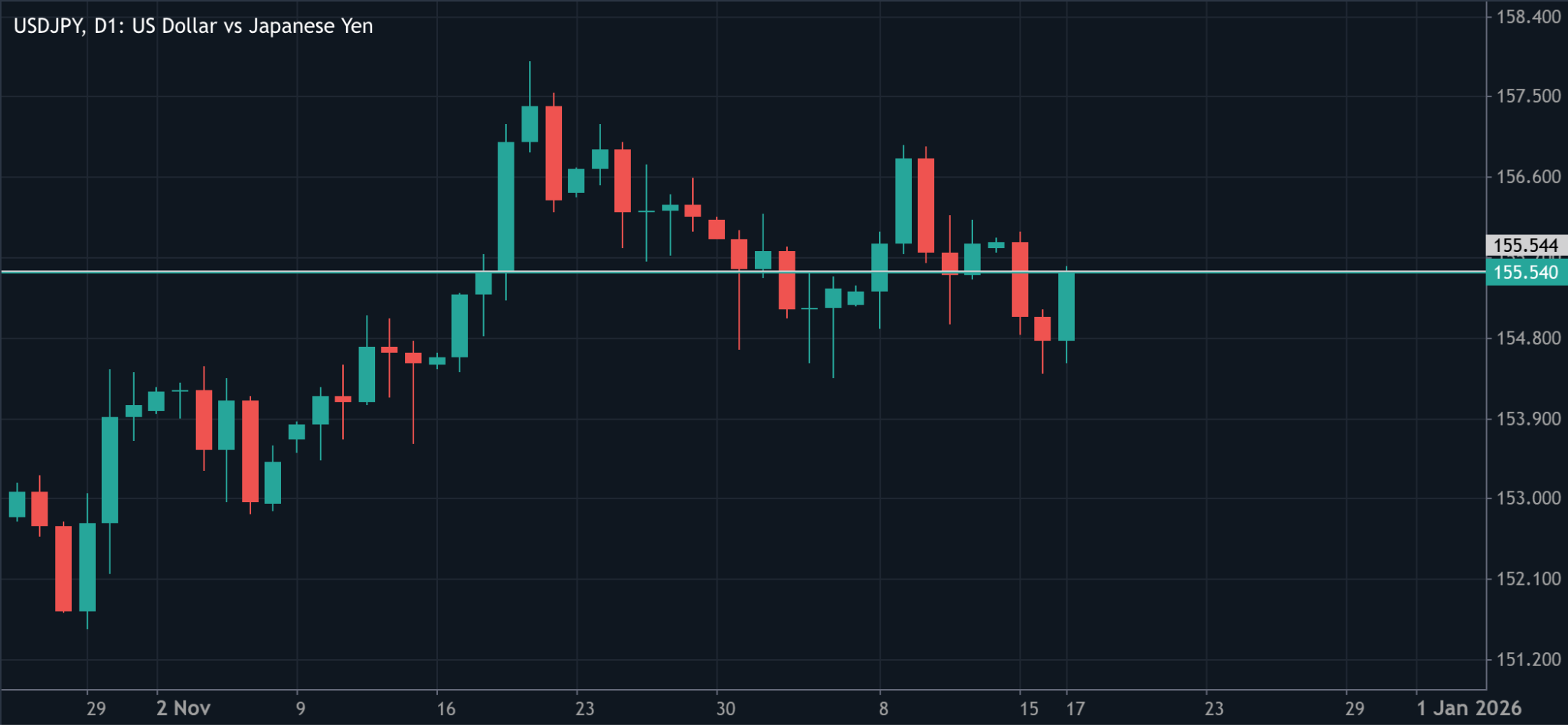
Financial markets absorbed the data without drama, but the underlying shifts were telling. US equities traded modestly lower as investors reassessed growth expectations, while the US dollar weakened across major currency pairs. USD/JPY slipped towards 154.6 as softer US data collided with rising expectations of a Bank of Japan rate hike later this week, before a significant uptick that saw the pair reclaim the 155 price level.
Commodities reflected the same macro recalibration. Copper prices eased despite remaining up more than 30% this year, with thin year-end liquidity exaggerating moves as traders locked in gains. Oil prices fell towards $55 a barrel, pressured by optimism over potential progress in the Russia-Ukraine peace talks and growing concerns about a supply glut in 2026, as global demand signals soften.
Expert outlook
Looking ahead, economists expect labour market cooling to persist into early 2026 rather than reverse. Inflation data support that view, reinforcing expectations that price pressures will continue to ease.
History offers a useful parallel. During the Fed’s 2019 easing cycle, the dollar index weakened in the months following the first rate cut, after an initial jump, as markets adjusted to a lower-rate environment. With another NFP report due in early January, just weeks before the Fed’s next meeting, investors will be watching closely for confirmation that November’s slowdown was not a one-off, but the start of a broader shift.
Key takeaway
November’s NFP report confirms that the US labour market is cooling in a measured and controlled way. Hiring is slowing, wages are easing, and unemployment is edging higher without triggering recession fears. That combination strengthens the case for rate cuts later in 2026 and keeps downward pressure on the US dollar. The next decisive signals will come from inflation data and the Federal Reserve’s guidance as markets transition into the new year.
USD/JPY technical insights
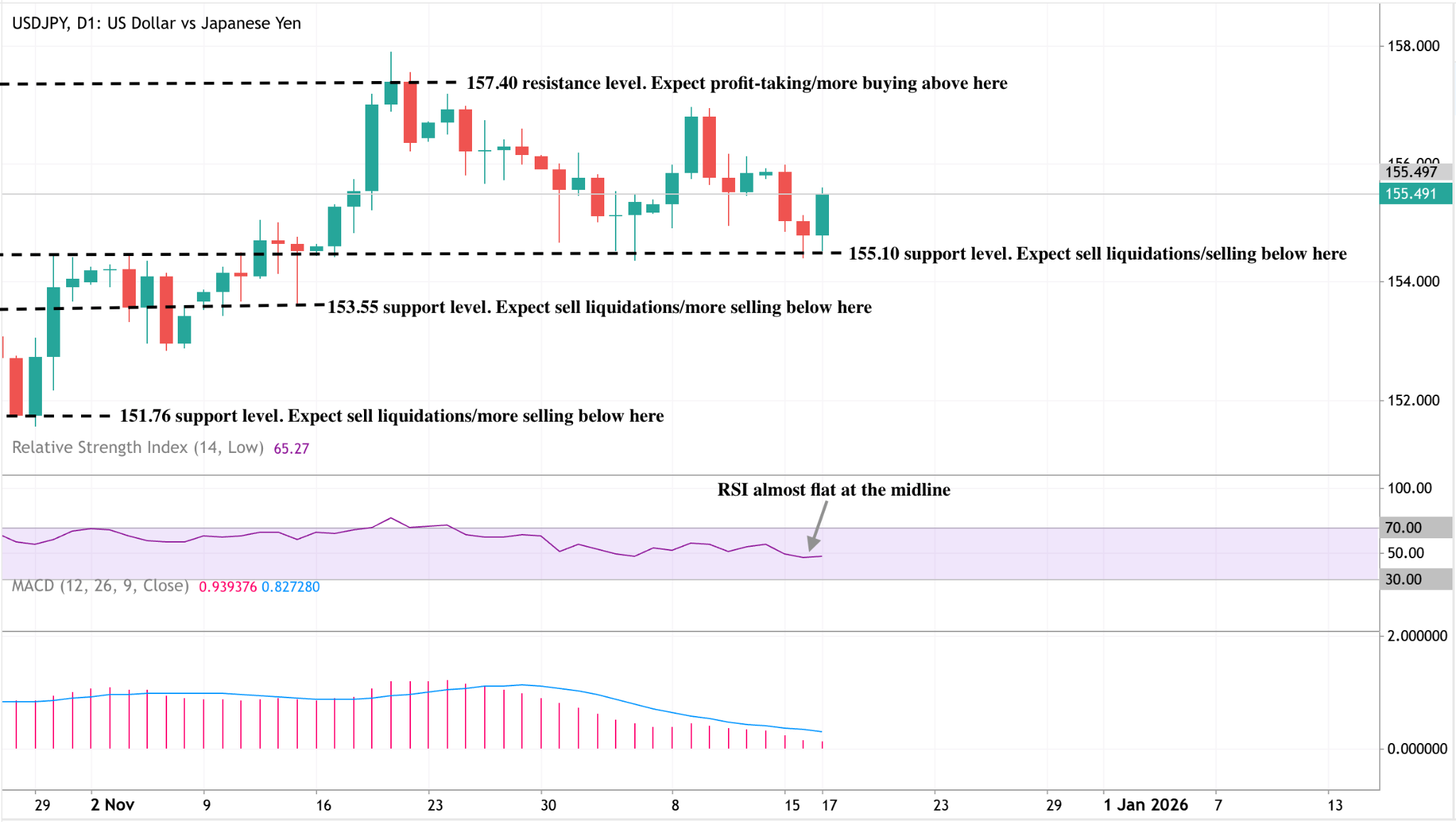
USD/JPY is consolidating just above the 155.10 support zone after failing to hold gains near the 157.40 resistance, signalling a pause in upside momentum rather than a broader trend reversal. Price action remains range-bound, reflecting a fragile equilibrium between persistent US dollar strength and intermittent demand for the Japanese yen as traders assess shifting interest-rate expectations.
Momentum indicators reinforce this neutral bias. The RSI is hovering close to the 50 midline, highlighting a lack of clear directional conviction, while the MACD remains marginally positive but is flattening, a sign that bullish momentum is beginning to fade. Traders tracking these signals on platforms such as Deriv MT5 are increasingly focused on whether the price holds above near-term support. Meanwhile, tools like the Deriv Trading Calculator are being used to gauge position sizing and risk should volatility pick up around key levels.
As long as 155.10 remains intact, the broader bullish structure is preserved. However, a decisive break below this level could open the door to deeper downside towards 153.55 and potentially 151.76. On the upside, a sustained move back above 157.40 would be needed to re-ignite momentum and shift the technical outlook back in favour of the bulls.
The performance figures quoted are not a guarantee of future performance.


