
Warum XRP fällt, obwohl institutionelles Geld einfließt

Die Kursentwicklung von XRP erzählt eine bekannte Krypto-Geschichte: Analysten sagen, dass Institutionen weiterhin kaufen, während sich Privatanleger leise zurückziehen. Die Spot-ETF-Zuflüsse in XRP stiegen in einer einzigen Sitzung auf fast 8 Millionen US-Dollar und verlängerten damit eine vier Tage andauernde Phase institutioneller Nachfrage. Dennoch schwächt sich die Preisdynamik weiter ab, belastet durch rückläufige Futures-Aktivität und sinkende Liquidität.
Gleichzeitig ist das offene Interesse an XRP-Futures auf ein Jahrestief von rund 3,29 Milliarden US-Dollar gefallen, was auf eine nachlassende Überzeugung unter gehebelten Tradern hindeutet.
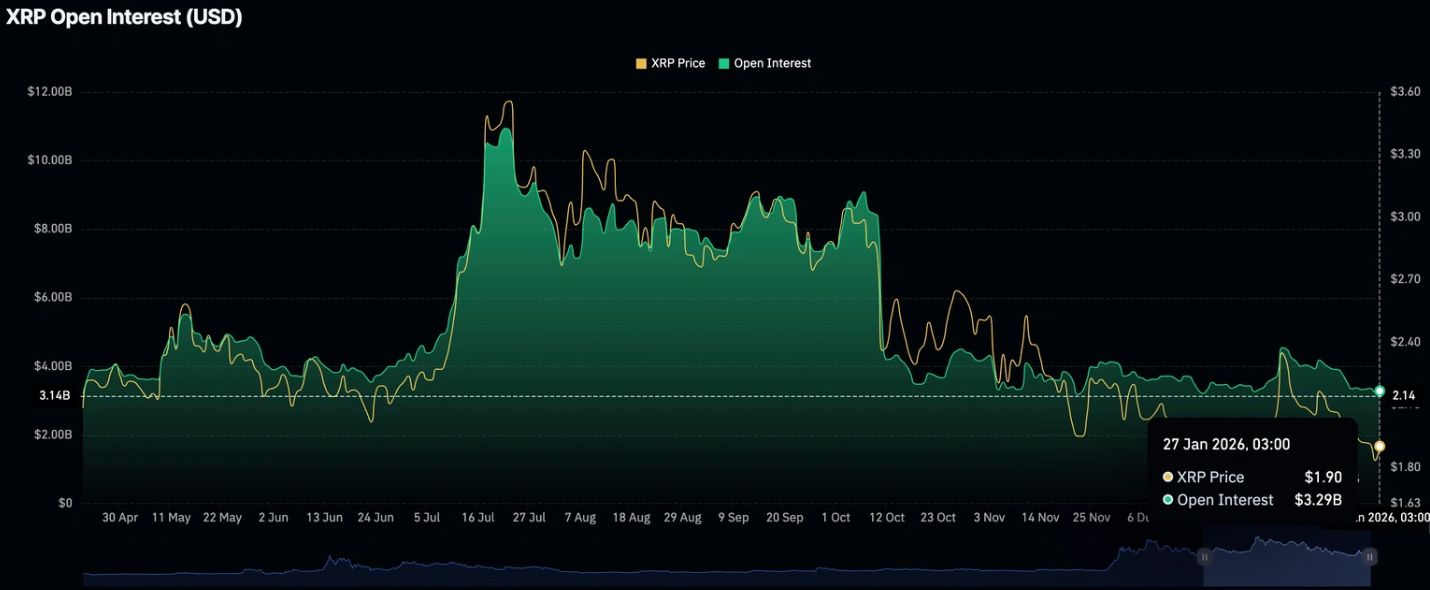
Dieses wachsende Ungleichgewicht zwischen institutionellen Zuflüssen und der Beteiligung von Privatanlegern prägt den kurzfristigen Ausblick für XRP und wirft die Frage auf, ob die ETF-Nachfrage allein die Preise stabilisieren kann.
Was treibt den Rückgang von XRP an?
Der unmittelbarste Belastungsfaktor für XRP kommt derzeit vom Derivatemarkt. Das offene Interesse an Futures, das den Gesamtwert aller ausstehenden gehebelten Positionen widerspiegelt, bewegt sich nur knapp über dem Jahrestief. Wenn das offene Interesse sinkt, bedeutet das in der Regel, dass Trader Positionen schließen, anstatt neue zu eröffnen – das verringert die spekulative Dynamik und schwächt die Preisunterstützung.
Dieser Trend ist nicht auf XRP beschränkt. Im gesamten Kryptomarkt ist die Futures-Aktivität stark zurückgegangen. Das gesamte offene Krypto-Interesse ist laut CoinGlass auf 128 Milliarden US-Dollar gefallen – der niedrigste Stand seit Anfang Januar. Wenn die Liquidität versiegt, leiden Altcoins meist zuerst, insbesondere solche wie XRP, die stark auf spekulative Beteiligung angewiesen sind, um kurzfristige Kursbewegungen zu erzielen.
Warum das wichtig ist
Trotz des schwachen Derivate-Umfelds bleibt das institutionelle Interesse an XRP bestehen. Daten von SoSoValue zeigen, dass XRP-Spot-ETFs am Montag fast 8 Millionen US-Dollar an Zuflüssen verzeichneten – mehr als doppelt so viel wie am Freitag. Die kumulierten Zuflüsse belaufen sich nun auf 1,24 Milliarden US-Dollar, während die Nettovermögenswerte 1,36 Milliarden US-Dollar erreichen – ein Zeichen für anhaltende Nachfrage von langfristig orientierten Investoren.
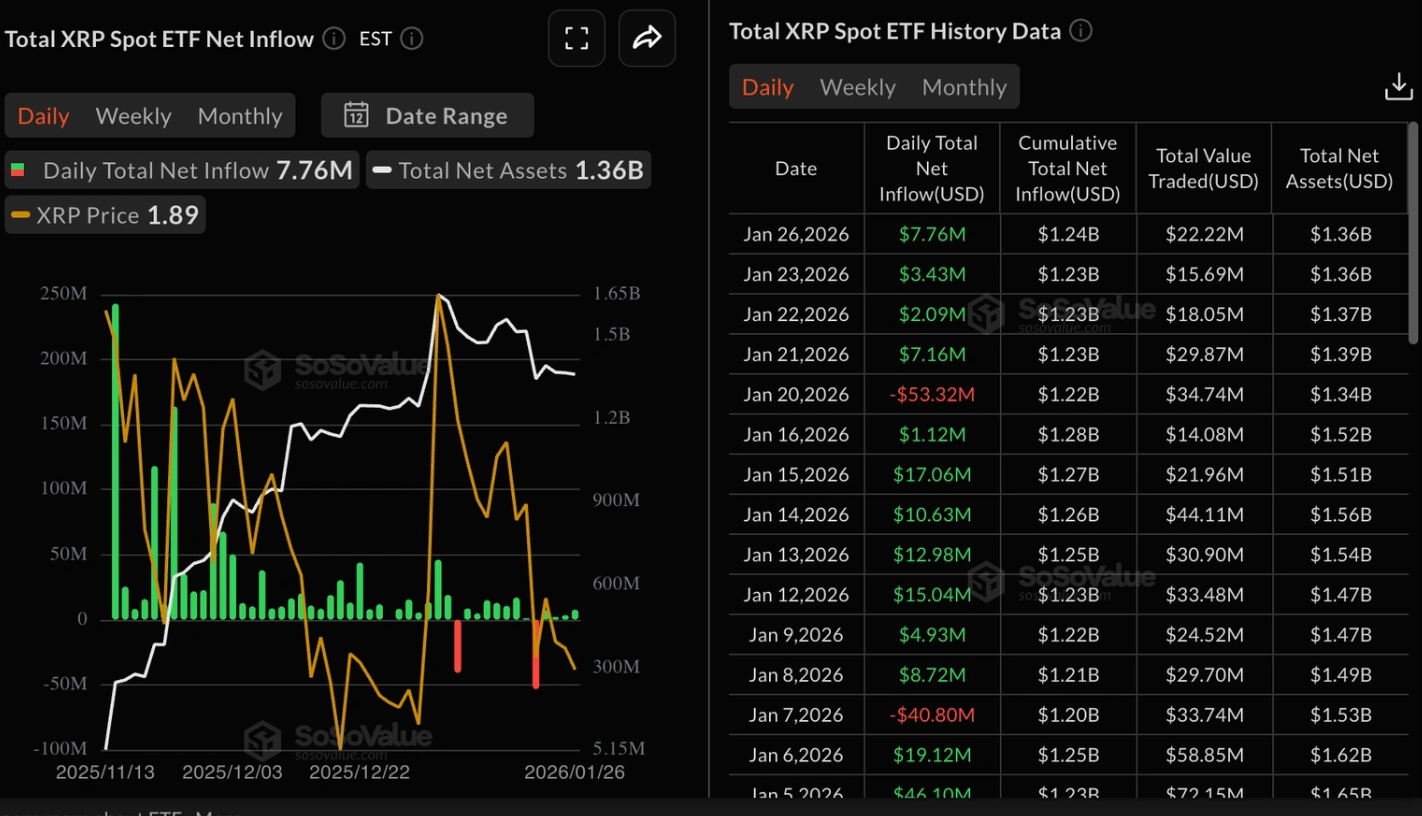
Allerdings hat diese institutionelle Unterstützung ihre Grenzen. Wie Samer Hasn, Senior Market Analyst bei XS.com, erklärt: „Die Liquidität schrumpft über alle Kanäle hinweg“, und weist darauf hin, dass die jüngsten ETF-Zuflüsse nach Abflüssen von 1,3 Milliarden US-Dollar in der Vorwoche erfolgten. Ohne das zusätzliche Volumen und den Hebel der Privatanleger könnten ETF-Käufe den Preisrückgang zwar verlangsamen, aber es wird schwierig, eine nachhaltige Erholung auszulösen.
Auswirkungen auf den Kryptomarkt
Die Schwäche von XRP spiegelt einen breiteren Wandel im Marktverhalten wider. Während die makroökonomische Unsicherheit anhält, wird Kapital aus spekulativen Anlagen abgezogen und in sicherere Häfen umgeschichtet. Innerhalb des Kryptomarkts hat dies Bitcoin gegenüber Altcoins begünstigt, sodass Token wie XRP bei angespannten Liquiditätsbedingungen besonders exponiert sind.
Die Auswirkungen zeigen sich bereits in der Kursentwicklung. XRP verzeichnete kürzlich sieben aufeinanderfolgende Verlusttage und setzt damit ein längerfristiges Muster fort, in dem der Token an 13 der letzten 14 Handelstage gefallen ist. In einem Umfeld mit geringer Liquidität kann selbst moderater Verkaufsdruck die Preise weiter nach unten treiben, was die negative Stimmung verstärkt und neue Marktteilnehmer abschreckt.
Expertenausblick
Analysten bleiben hinsichtlich der kurzfristigen Aussichten für XRP vorsichtig. Während ETF-Zuflüsse eine strukturelle Unterstützung bieten, reichen sie nicht aus, um die rückläufige Derivate-Beteiligung auszugleichen. Eine nachhaltige Erholung würde wahrscheinlich eine Erholung des offenen Futures-Interesses erfordern, begleitet von steigenden Handelsvolumina und einer breiteren Risikobereitschaft.
Vorerst bleibt XRP anfällig für weitere Rückgänge, falls sich die Liquiditätsbedingungen nicht verbessern. Trader werden genau auf Anzeichen für ein erneutes spekulatives Interesse achten, insbesondere auf eine Stabilisierung des offenen Interesses oder eine Stimmungswende im Kryptomarkt insgesamt. Bis dahin könnten institutionelle Zuflüsse eher als Puffer denn als Katalysator wirken.
Wichtigste Erkenntnis
Der Rückgang von XRP verdeutlicht die wachsende Kluft zwischen institutionellem Interesse und der Beteiligung von Privatanlegern. Während ETF-Zuflüsse weiterhin Unterstützung bieten, belasten die nachlassende Derivate-Aktivität und die schrumpfende Liquidität die Preise. Solange die spekulative Nachfrage nicht zurückkehrt, dürfte XRP unter Druck bleiben. Das nächste wichtige Signal ist, ob das offene Futures-Interesse wieder ansteigt.
XRP: Technischer Ausblick
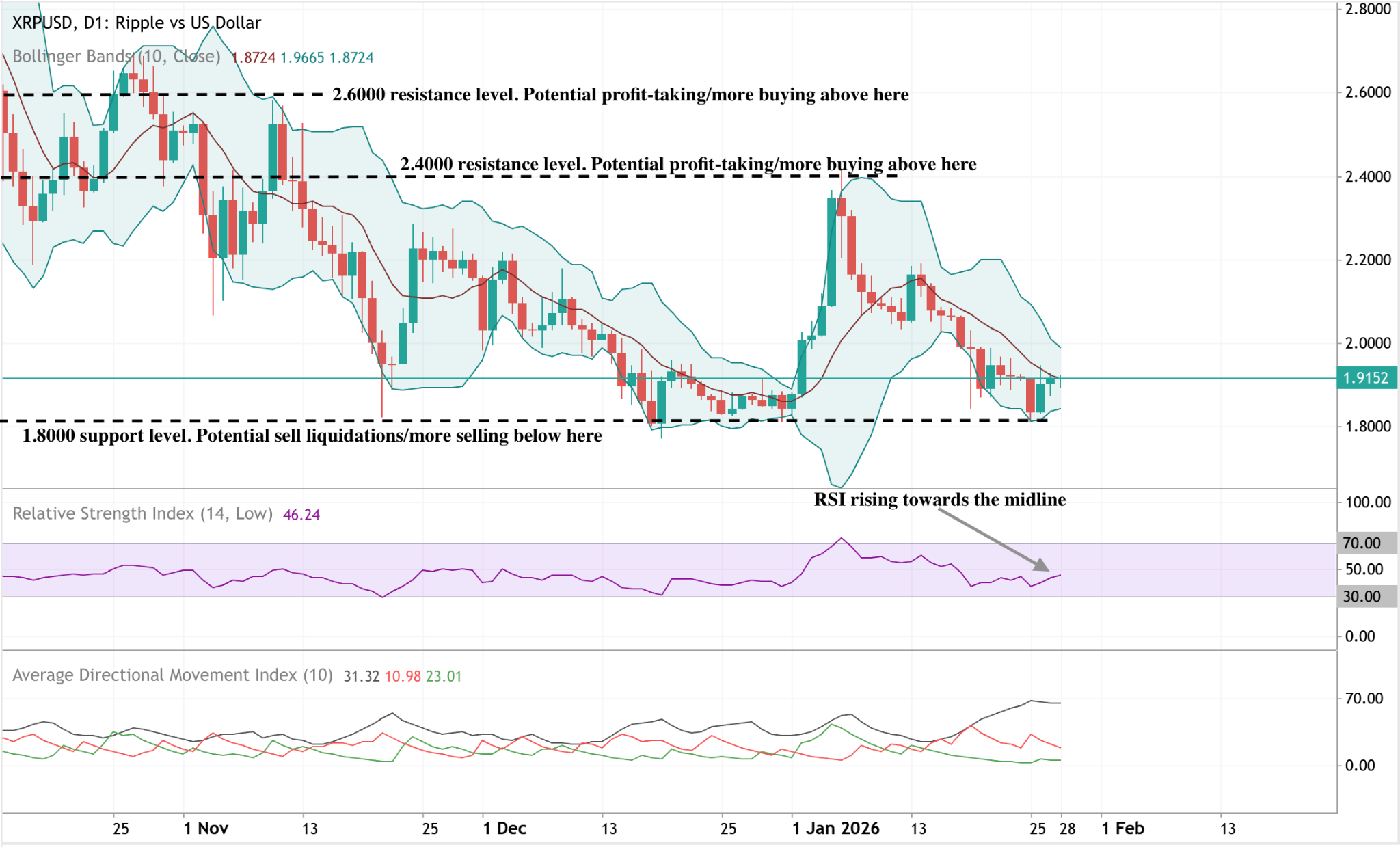
XRP stabilisiert sich nach einem starken Anstieg und anschließender Korrektur, wobei sich der Kurs nun im mittleren Bereich der jüngsten Struktur konsolidiert. Die Bollinger-Bänder haben sich nach einer vorherigen Ausweitung verengt, was auf eine abnehmende Volatilität hindeutet, da die Richtungsmomentum nachgelassen hat.
Momentum-Indikatoren spiegeln diese Abschwächung wider: Der RSI steigt allmählich in Richtung Mittellinie, was auf eine Verbesserung des Momentums von zuvor schwächeren Niveaus hindeutet, ohne dass überkaufte Bedingungen erreicht werden. Die Trendstärke bleibt vorhanden, ist aber weniger ausgeprägt, wobei die ADX-Werte auf eine Verlangsamung der Richtungsintensität im Vergleich zu früheren Phasen hinweisen.
Strukturell bleibt der Kurs zwischen den oberen Zonen bei etwa 2,40–2,60 US-Dollar und dem unteren Bereich um 1,80 US-Dollar eingegrenzt, was ein Marktumfeld widerspiegelt, das von Konsolidierung statt aktiver Preisfindung geprägt ist.
Die angegebenen Wertentwicklungen sind keine Garantie für zukünftige Ergebnisse.


