
لماذا لا يستطيع البيتكوين الثبات عند 90,000 دولار بينما الذهب والنفط يرتفعان

استعاد البيتكوين مستوى 90,000 دولار أكثر من مرة هذا العام، ومع ذلك تلاشت كل محاولة بسرعة. بينما تكافح أكبر عملة مشفرة في العالم لبناء الزخم، تسرق التداولات الماكرو التقليدية الأضواء. فقد ارتفع الذهب إلى مستويات قياسية جديدة فوق 5,500 دولار للأونصة، بينما صعدت أسعار النفط إلى أقوى مستوياتها منذ سبتمبر، مما أعاد تشكيل توقعات التضخم وسلوك المستثمرين.
التباين واضح. فالبيتكوين، الذي يُروَّج له غالبًا كأداة تحوط ضد عدم الاستقرار النقدي، يتداول الآن عند مستوى أقل بحوالي 30% من ذروته في أكتوبر البالغة 126,000 دولار، حتى مع ازدهار السلع الأساسية. لفهم سبب عدم قدرة البيتكوين على الثبات عند 90,000 دولار، يجب النظر إلى ما هو أبعد من السرديات الخاصة بالكريبتو والتركيز على القوى الماكرو التي تقود الأسواق العالمية حاليًا.
ما الذي يدفع ضعف البيتكوين؟
في قلب معاناة البيتكوين يكمن تحول في التوقعات النقدية. فقد أبقى Federal Reserve أسعار الفائدة دون تغيير هذا الأسبوع، محافظًا عليها في نطاق 3.5%–3.75% وأشار إلى أنه يريد أدلة أوضح على تباطؤ التضخم قبل أن يخفضها مجددًا. وبينما كان القرار متوقعًا على نطاق واسع، إلا أن النبرة كانت مهمة. فقد تراجعت الآمال في تخفيف السيولة بسرعة وساعد ذلك على استقرار الدولار الأمريكي بعد أيام من التقلبات.
هذا الدولار الأقوى قلل من أحد عوامل الدعم الأخيرة للبيتكوين. فقد دعمت موجات ضعف الدولار السابقة الأصول ذات المخاطر، لكن مع تحقيق مؤشر الدولار أكبر مكسب يومي له منذ نوفمبر، عاد رأس المال إلى الأصول التي يُنظر إليها على أنها مخازن أكثر موثوقية للقيمة. لامس البيتكوين لفترة وجيزة مستوى 90,000 دولار خلال جلسة الأربعاء لكنه فشل في جذب متابعة مستدامة، وتراجع مع إعادة تركيز المتداولين الماكرو في أماكن أخرى.
لماذا يفوز الذهب والنفط في معركة رأس المال؟
ارتفاع الذهب كان بلا هوادة. فقد ارتفعت الأسعار بأكثر من 60% خلال العام الماضي وواصلت مكاسبها حتى عام 2026، مدفوعة بتراجع الثقة في العملات الورقية، والمخاطر الجيوسياسية، والمخاوف بشأن استقلالية البنوك المركزية.
حتى Tether، مُصدر أكبر عملة مستقرة في العالم، زاد من تعرضه، حيث يحتفظ بحوالي 130 طنًا متريًا من الذهب الفعلي ويشير إلى خطط لتخصيص ما يصل إلى 15% من محفظته للسبائك.
وأضاف النفط طبقة أخرى من الضغط. فقد ارتفع خام غرب تكساس الوسيط بنحو 12% هذا الشهر ليتجاوز 64 دولارًا للبرميل، بينما اتبع خام برنت مسارًا مشابهًا. تؤدي أسعار الطاقة المرتفعة مباشرة إلى زيادة التضخم، مما يرفع التكاليف عبر النقل والتصنيع والسلع الاستهلاكية. هذا الديناميكية تعقد التوقعات بشأن خفض أسعار الفائدة وتضعف الأصول مثل البيتكوين التي تستفيد من ظروف مالية أكثر مرونة.
لماذا هذا مهم للبيتكوين
يكشف عدم قدرة البيتكوين على مواكبة الذهب عن حقيقة غير مريحة. فعلى الرغم من سمعته كـ"ذهب رقمي"، لا يزال الأصل يتداول كأداة عالية المخاطر أكثر من كونه وسيلة تحوط دفاعية. عندما تزداد مخاوف التضخم، يختار المستثمرون السبائك. وعندما يقوى الدولار، يتراجع البيتكوين.
قال ديفيد موريسون، كبير محللي الأسواق في Trade Nation، إن البيتكوين يحتاج إلى اختراق والثبات بشكل مقنع فوق 90,000 دولار لجذب عمليات شراء جديدة. وأضاف: "هذا يعني أن 100,000 دولار ستصبح الهدف الصعودي التالي"، محذرًا من أنه بدون دعم أقوى، يبقى التحرك دون 85,000 دولار أمرًا واردًا. في الوقت الحالي، لا تزال القناعة هشة.
تأثير ذلك على سوق الكريبتو الأوسع
لقد أثقل غياب الزخم على مجمع الكريبتو الأوسع. فقد تراجع الإيثر نحو 2,950 دولارًا، بينما سجلت Solana وXRP وDogecoin خسائر يومية أعمق. وقد تخلفت الكريبتو باستمرار عن السلع والأسهم، حتى خلال الفترات التي ضعف فيها الدولار في وقت سابق من هذا الشهر.
يعزز هذا التباين الرأي القائل بأن الكريبتو لا تزال على الهامش في النظام السوقي الحالي. وبينما تهيمن المعادن والطاقة على تدفقات التداول العالمية، كافح البيتكوين لتطوير سرد مستقل خاص به. يرى المتداولون بشكل متزايد أنه يستجيب لإشارات الماكرو الخارجية بدلاً من قيادة اتجاهه الخاص.
توقعات الخبراء
يقول المحللون إن التحرك الحاسم التالي للبيتكوين يعتمد بدرجة أقل على قصص التبني الداخلي وأكثر على التحولات الماكرو. أشار أليكس كوبتسيكيفيتش، كبير محللي الأسواق في FxPro، إلى أن الارتفاعات السابقة تزامنت مع انخفاضات حادة في الدولار. لكن هذه المرة، استحوذ الذهب والفضة على معظم المكاسب الناتجة عن ضعف العملة مؤخرًا.
من الناحية الفنية، لا يزال البيتكوين في مرحلة تجميع. المقاومة حول 89,000–90,000 دولار مدعومة بمتوسط الحركة لـ50 يومًا، بينما صمد الدعم بالقرب من 85,000 دولار حتى الآن. وحتى تهدأ ضغوط التضخم، أو تنخفض أسعار النفط، أو يشير Fed إلى تخفيف جديد، من المرجح أن يبقى البيتكوين ضمن نطاق تداول بدلاً من استئناف اتجاه صعودي قوي.
الخلاصة الرئيسية
فشل البيتكوين في الثبات عند 90,000 دولار ليس قصة خاصة بالكريبتو بل قصة ماكرو. مع ارتفاع الذهب والنفط، وزيادة مخاطر التضخم، واستمرار Fed في الحذر، تدفق رأس المال بعيدًا عن الأصول المضاربية. وحتى تهدأ هذه الضغوط، من المرجح أن يبقى البيتكوين عالقًا في مرحلة تجميع. وستعتمد الحركة الرئيسية التالية على بيانات التضخم، وأسعار الطاقة، والتحولات في توقعات البنوك المركزية.
التوقعات الفنية للبيتكوين
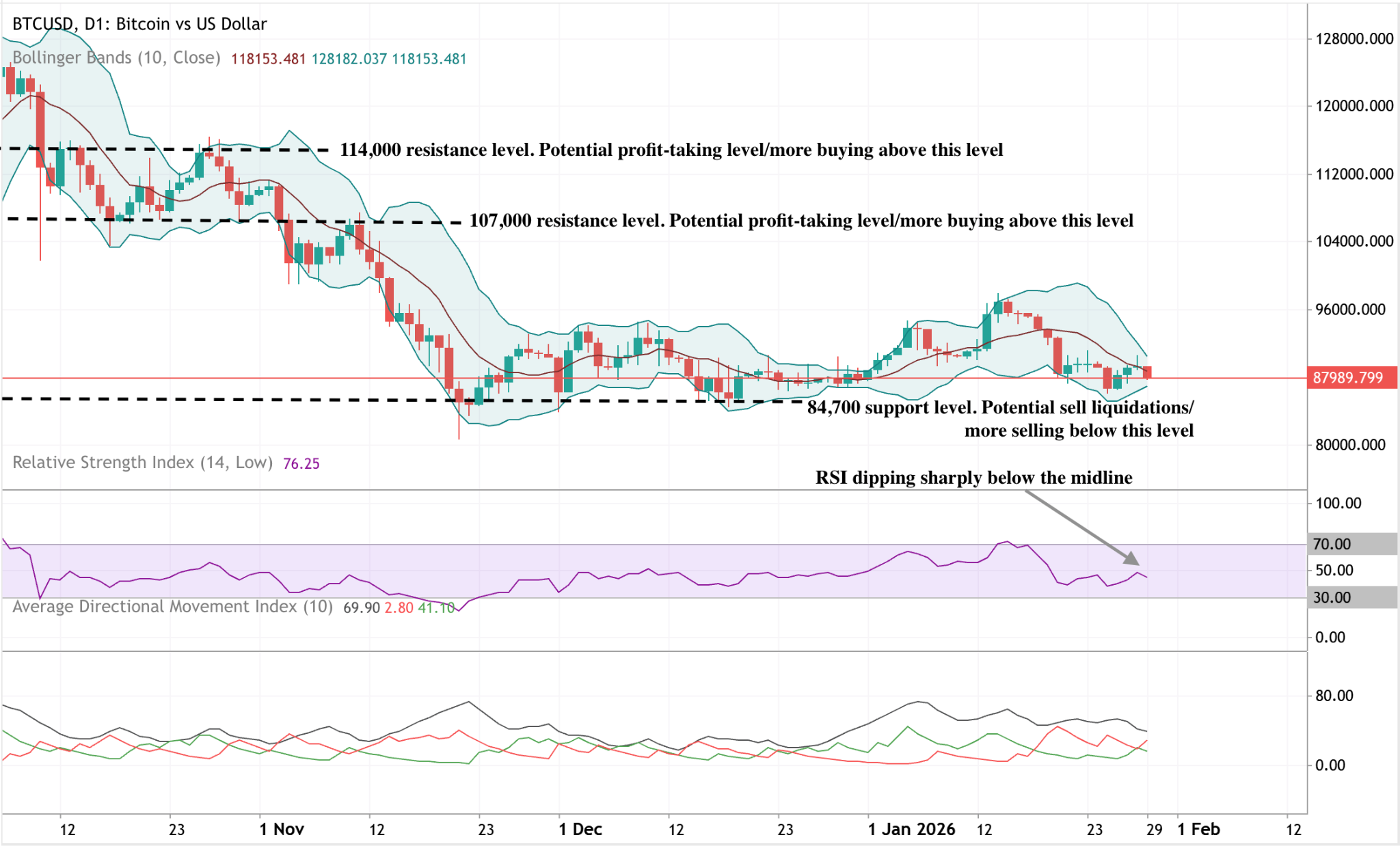
لا يزال البيتكوين في مرحلة تجميع بعد تصحيحه السابق من القمم، حيث يتداول السعر بالقرب من النصف الأدنى من نطاقه الأخير ويستقر فوق منطقة 84,700 دولار. لقد ضاقت نطاقات Bollinger Bands مقارنة بالتوسع السابق، مما يشير إلى انخفاض التقلبات وتباطؤ الزخم الاتجاهي.
تشير مؤشرات الزخم إلى ضعف في الأداء، حيث انخفض RSI دون خط المنتصف، مما يعكس ضعف الزخم الصعودي بعد محاولة تعافٍ قصيرة. لا تزال قوة الاتجاه مرتفعة، كما يتضح من قراءات ADX العالية، رغم أن المؤشرات الاتجاهية تشير إلى أن الاتجاه فقد زخمه. من الناحية الهيكلية، يواصل السعر التذبذب أسفل مناطق المقاومة السابقة حول 107,000 و114,000 دولار، مما يشير إلى بيئة سوقية تتسم بالتجميع أكثر من اكتشاف الأسعار النشط.
الأرقام المتعلقة بالأداء المذكورة ليست ضمانًا للأداء المستقبلي.


