
Why are analysts slashing Bitcoin targets for 2025 - 2030?
.png)
Analysts are cutting their Bitcoin targets because the forces that once pushed the cryptocurrency towards ever-higher projections have lost momentum. ETF inflows, which were expected to form the backbone of the next bull market cycle, have slowed to their weakest level since their launch, while corporate treasury buyers, such as MicroStrategy, have stepped back from aggressive accumulation.
Standard Chartered, which once predicted Bitcoin would reach $200,000 by year-end, now expects only $100,000 and has halved its forecasts for the second half of the decade.
According to reports, the reassessment comes as Bitcoin holds just above $91,000 after a 30% slide from its October peak. With liquidity thinning and macro uncertainty rising ahead of a widely expected December rate cut, traders are looking to the Federal Reserve for the next decisive signal. Whether this moment marks a pause or a lasting repricing will shape Bitcoin’s outlook well into the 2030s.
What’s driving Bitcoin’s repricing?
Data revealed Bitcoin’s narrow trading band between $91,000 and $94,000 reflects a market caught between fragile confidence and diminishing structural demand. The dip to a seven-month low of $82,221 in mid-November underscored its vulnerability to tightening liquidity and reduced risk appetite.
Spot Bitcoin ETFs, which were meant to be a steady source of inflows throughout 2025, have gathered only around 50,000 BTC this quarter - the softest intake since they launched. That slowdown has forced analysts to reconsider the assumption that ETFs would consistently and predictably absorb supply.
Standard Chartered’s Geoffrey Kendrick described the downgrade as a “recalibration of demand expectations”, pointing to the fading role of corporate treasury buyers. The large digital-asset treasuries, or DATs, that turbocharged earlier bull cycles “have run their course”, in his view, as valuations and balance-sheet conditions no longer justify repeated accumulation.
Without that second leg of institutional buying, the burden falls almost entirely on ETF participation, making Bitcoin more sensitive to short-term investor flows and broader market sentiment. Bernstein’s revised projections follow the same logic: the long-term story remains intact, but the timeline has stretched as adoption flattens.
Why it matters
Experts expressed that forecast changes are not merely academic. They challenge the notion that Bitcoin’s price path can be predicted solely through halving cycles or historical patterns. A 30% retreat from the October high above $126,000 has already tested the belief that supply-driven rallies are inevitable.
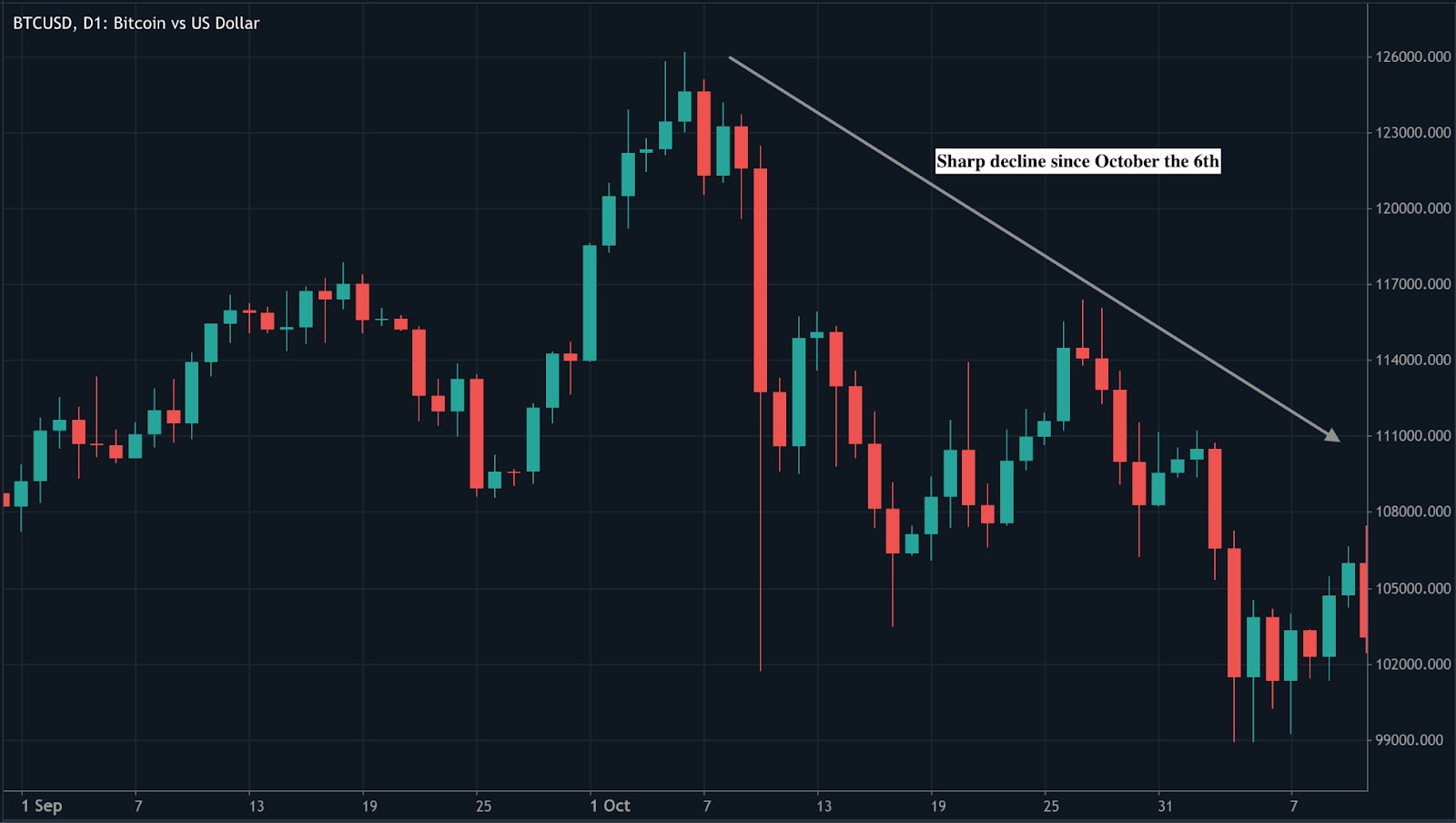
Market watchers anticipate that if institutional capital becomes sporadic rather than structural, Bitcoin’s trajectory becomes increasingly dependent on liquidity conditions, policy expectations, and the broader economic cycle. Kendrick’s view that “crypto winters are a thing of the past” raises an intriguing paradox: Bitcoin may avoid deep collapses, yet also struggle to reclaim parabolic momentum without fresh sources of demand.
The political environment adds another layer of uncertainty. Markets are almost certain that the Federal Reserve will cut rates by 25 basis points this week, but attention is fixed on Chair Jerome Powell’s comments about the path for 2026.
Speculation that Kevin Hassett could eventually lead the Fed has intensified debate over whether future policy may tilt towards more aggressive easing. For Bitcoin, which increasingly behaves as a high-beta liquidity asset, shifts in the policy outlook may matter more than long-held narratives about supply dynamics or institutional adoption.
Impact on markets and investors
The cooling of enthusiasm surrounding Bitcoin has spilled over into the broader cryptocurrency market. Spot ETFs recorded $60 million in net outflows on Monday, marking a reversal from the persistent inflows seen earlier this year.
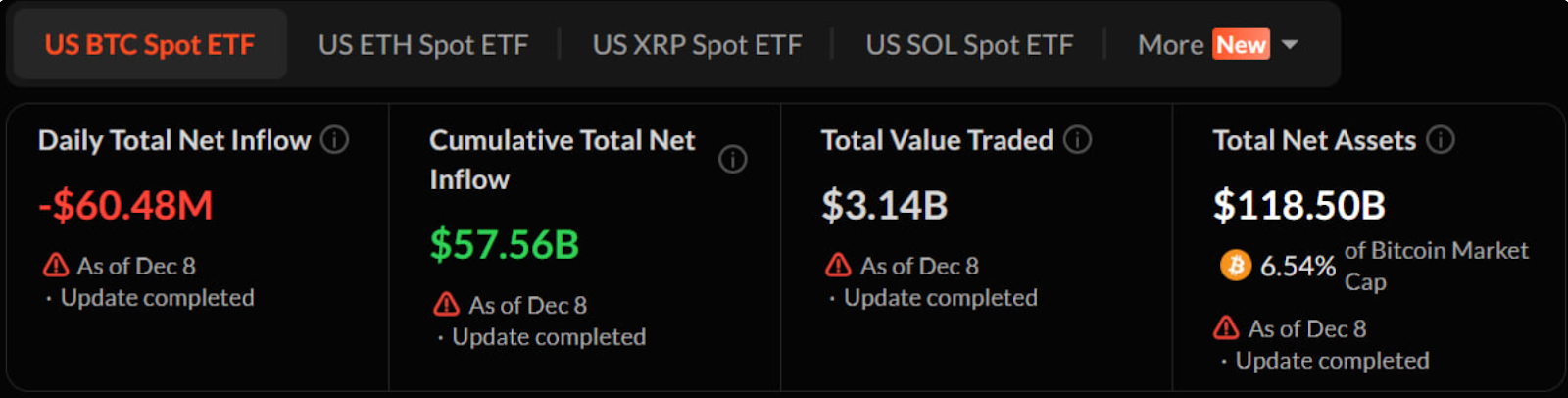
Institutional desks that once treated dips as buying opportunities are now treading cautiously, wary of committing capital before the Fed clarifies its stance. Lower liquidity has kept volatility subdued, masking the fragility of market depth that has emerged in recent weeks.
This quieter landscape has changed how traders interpret key price levels. Analysts at Delta Exchange believe a clean break above $94,000 would confirm a bullish continuation, yet the absence of strong order-book support suggests investors are unwilling to force directional moves.
Ethereum’s relative strength heading into the FOMC meeting shows selective risk appetite rather than a broad revival of confidence. The message across markets is consistent: positioning is defensive, not pessimistic, but conviction will not return without clearer macro guidance.
Expert outlook
Even with forecasts being revised downward, analysts still expect Bitcoin to rise over the next five years, albeit at a more moderate pace. Standard Chartered now places its 2026 target at $150,000, down from $300,000, and pushes its $500,000 milestone from 2028 to 2030. Bernstein predicts that Bitcoin will reach around $150,000 next year and approach $200,000 by 2027, reinforcing expectations of slower, steadier growth rather than explosive cycles. These projections highlight a market that is maturing: one driven by professional capital, regulated flows, and macro dynamics rather than retail frenzy.
The biggest unknown remains U.S. monetary policy. A dovish signal on Wednesday could restore liquidity and revive ETF participation; a cautious or hawkish tone may prolong the consolidation phase into early 2026. Traders will scrutinise Powell’s language for hints about the January meeting and the broader strategy for the year ahead. In a market that now trades on nuance as much as narrative, these cues could shift sentiment more dramatically than the rate cut itself.
Key takeaway
Analysts are slashing Bitcoin targets because the market’s most powerful demand drivers have weakened simultaneously. ETF inflows have cooled, corporate treasury buyers have stepped back, and macro policy uncertainty has grown ahead of the Fed’s December decision. Despite this, long-term expectations remain positive, though stretched over a longer horizon. The next major signal will come from Powell’s guidance, which is likely to define whether Bitcoin resumes its climb towards six-figure territory or extends its consolidation into 2026.
Bitcoin technical insights
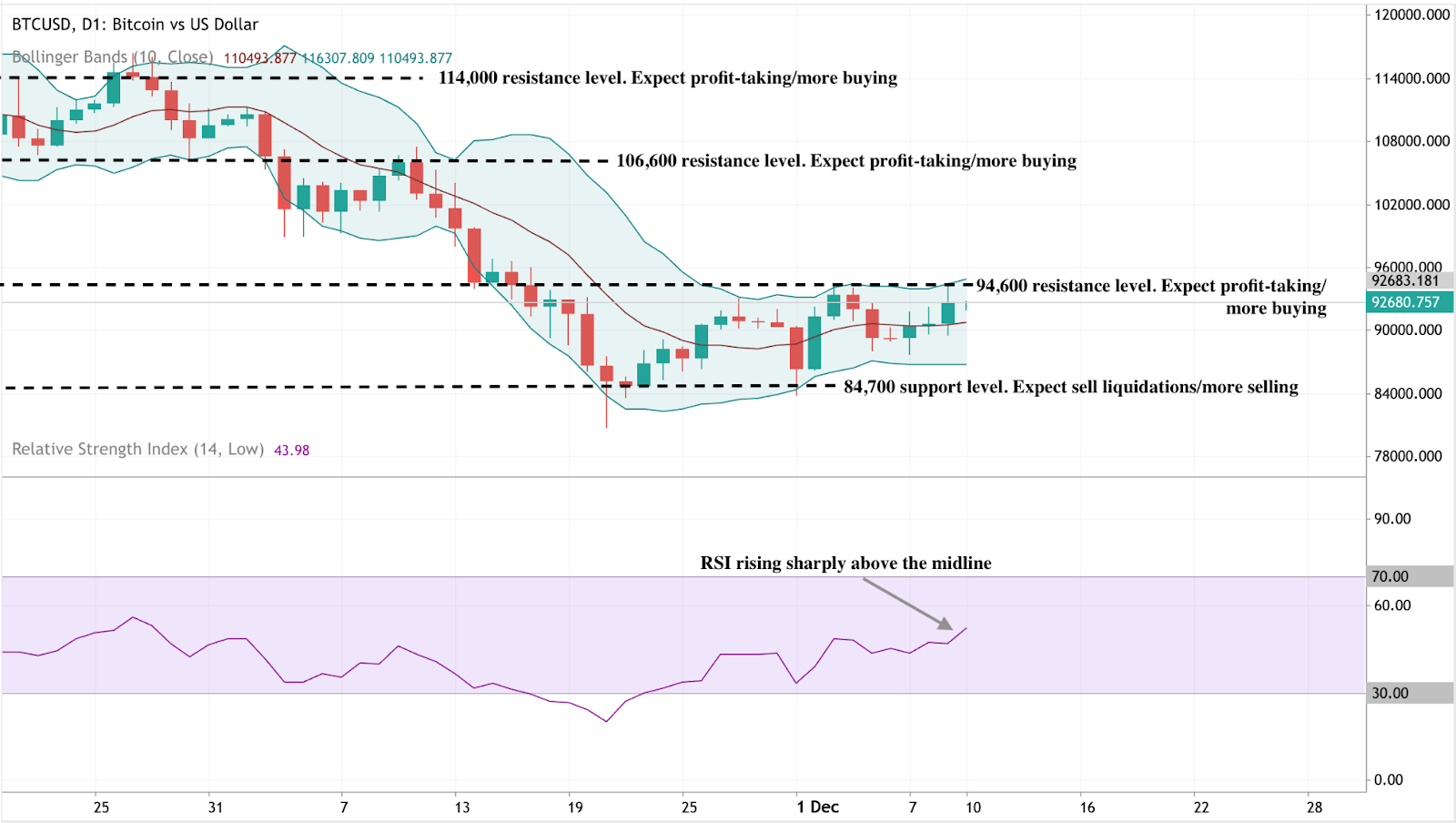
At the time of writing, Bitcoin (BTC/USD) is trading near $92,680, holding its recovery after bouncing from the $84,700 support zone - an area where deeper declines would likely have triggered forced liquidations across leveraged positions. The price is now leaning into the $94,600 resistance level, with higher ceilings at $106,600 and $114,000, where traders often reassess risk exposure or prepare for renewed buying if momentum strengthens.
BTC remains in the upper half of its Bollinger Band range, a sign of improving sentiment but also a reminder that the market is pausing as candles press into resistance. Buyers have regained some control, yet the broader structure still appears range-bound until a decisive close above $94,600 confirms a shift in trend. This is typically where tools like the Deriv Trading Calculator become useful, helping traders estimate potential position sizes, margin requirements, or risk levels before committing to breakout setups.
The RSI, climbing rapidly above the midline towards the 55-60 region, reinforces that momentum is tilting in favour of buyers. While still comfortably below overbought territory, the indicator reflects growing bullish pressure - a constructive backdrop if BTC can break through $94,600 and build a stronger recovery leg. A sustained move above that threshold would signal that the market is ready to retest deeper resistance levels and potentially reshape sentiment heading into the next macro catalyst.
The performance figures quoted are not a guarantee of future performance.


