
Драгоценные металлы откатываются: это пауза или пик для цен на золото и серебро?

После стремительного январского ралли, которое подтолкнуло золото почти к $5 600 за унцию и увеличило стоимость серебра более чем на 60% за месяц, оба металла резко пошли вниз. Золото снизилось почти на 4% на азиатских торгах, в то время как серебро откатилось еще более агрессивно от рекордных максимумов, что вызвало сомнения в том, не перегрелось ли ралли.
На данный момент больше свидетельств в пользу паузы, чем пика. Продажи были вызваны фиксацией прибыли и возобновившейся неопределённостью в отношении денежно-кредитной политики США, а не крахом факторов, которые поддерживали рост. Пока рынки сосредоточены на скором выборе президента Дональда Трампа на пост следующего председателя Федеральной резервной системы, драгоценные металлы корректируются к ожиданиям — но не отказываются от своей долгосрочной истории.
Что вызывает откат на рынке драгоценных металлов?
Непосредственным триггером снижения стали скорее политические, чем экономические факторы. Ожидается, что президент Трамп объявит своего кандидата на замену председателя Федеральной резервной системы Джерома Пауэлла, причем бывший член совета Fed Кевин Уорш считается основным претендентом. Ранее Уорш поддерживал более резкое снижение ставок и критиковал политику Fed, что усилило неопределённость относительно будущего направления денежно-кредитной политики США.
Эта неопределённость изначально поддерживала привлекательность золота как защитного актива, подталкивая цены к рекордным максимумам. Однако, когда позиции стали чрезмерно загруженными, та же неопределённость начала работать в обратном направлении. Трейдеры стали фиксировать прибыль по мере прояснения ситуации, особенно после того, как доллар США отскочил от недавних минимумов. Когда золото растет почти на 25% за месяц, для коррекции достаточно совсем немного.
Почему это важно для инвесторов в золото и серебро
Масштаб отката важен, потому что он показывает, насколько ралли было обусловлено потоками, а не фундаментальными факторами. Золото и серебро выступали не только в качестве хеджей от геополитических рисков, но и как выражение снижающейся уверенности в американских активах на фоне фискальных опасений, угроз тарифов и публичной критики Федеральной резервной системы.
Как предупреждал стратег Julius Baer Карстен Менке, на рынках, где доминирует импульс, для разворота не требуется серьёзного шока. «Для коррекции нужно совсем немного», — отметил он, подчеркивая, насколько хрупкими могут стать настроения после пика энтузиазма. Для инвесторов этот сдвиг поднимает ключевой вопрос: устраняет ли коррекция избыточный оптимизм или же выявляет более глубокую уязвимость в торговле металлами.
Как волатильность серебра формирует более широкий рынок металлов
Серебро возглавило как ралли, так и откат. Цены снизились к $113 после достижения рекордного максимума около $121,66, завершив семидневную серию роста. Несмотря на коррекцию, серебро по-прежнему движется к росту более чем на 60% за месяц, что подчеркивает, насколько экстремальным было недавнее движение цен.
Двойная роль серебра усиливает его колебания. Наряду со спросом как на защитный актив, оно сильно зависит от ожиданий промышленного роста, что делает его более чувствительным к изменениям в настроениях к риску. По мере снижения американских фондовых рынков и сокращения инвесторами позиций в различных классах активов, серебро оказалось под наибольшим давлением ликвидации, увлекая за собой и общее настроение на рынке драгоценных металлов.
Это пауза или пик?
Несмотря на резкий откат, долгосрочные перспективы золота остаются неизменными. Фьючерсные рынки показывают меньшие потери, чем спотовые цены, что говорит о том, что инвесторы не покидают позиции, а лишь сокращают экспозицию. При сохраняющейся высокой инфляции и ожиданиях снижения ставки Fed уже в июне, более низкие реальные доходности могут продолжить поддерживать золото со временем.
Ключевой риск — это тайминг. Если доллар продолжит укрепляться, а политическое давление на Fed ослабнет, золоту и серебру может быть сложно быстро восстановить импульс. Однако новое напряжение на фондовом рынке или обострение геополитических рисков быстро возродят спрос на защитные активы. В этом смысле недавнее снижение больше похоже на паузу, вызванную перестроением позиций, а не на окончательный пик в цикле драгоценных металлов.
Основные выводы
Недавний откат золота и серебра отражает рынок, который опередил прояснение ситуации, а не потерял фундаментальную основу. Политическая неопределённость вокруг Федеральной резервной системы и укрепление доллара спровоцировали фиксацию прибыли после исключительного ралли. Будет ли это паузой или пиком, зависит от процентных ставок, доллара и глобальных настроений к риску в ближайшие недели.
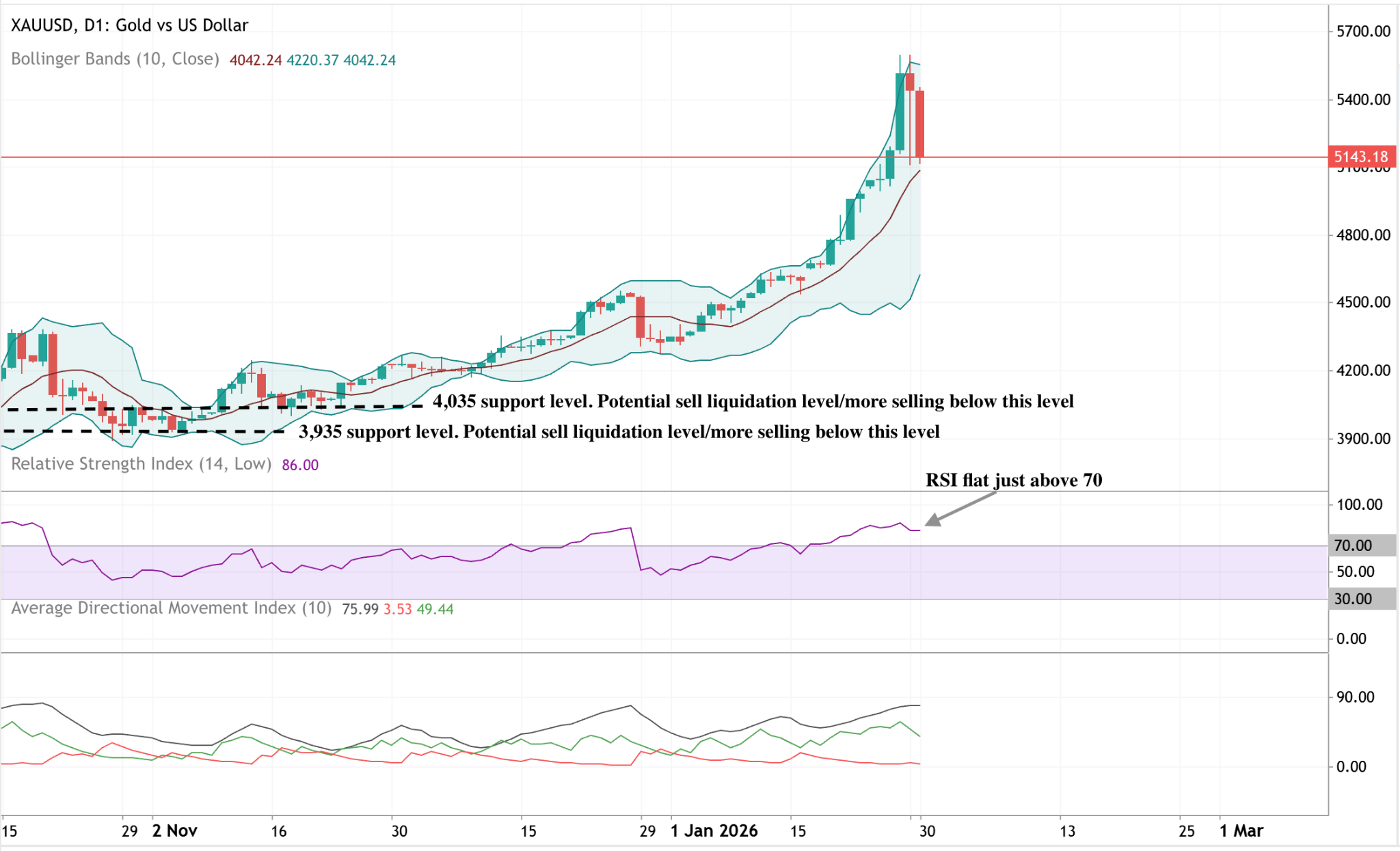
Технический взгляд на золото
Золото откатилось от недавних максимумов после резкого ускорения, цена ушла от верхней полосы Боллинджера, при этом волатильность остаётся высокой. Полосы Боллинджера по-прежнему широко расширены, что указывает на сохранение режима высокой волатильности, несмотря на недавнюю паузу.
Индикаторы импульса остаются на высоких уровнях: RSI держится чуть выше 70, что говорит о сохранении перекупленности, даже несмотря на замедление восходящего импульса. Сила тренда остаётся исключительно высокой, значения ADX повышены, что указывает на зрелую, хорошо сформированную фазу тренда. Структурно цена остаётся значительно выше предыдущих зон консолидации около $4 035 и $3 935, что подчеркивает масштаб предыдущего роста.
Технический взгляд на серебро
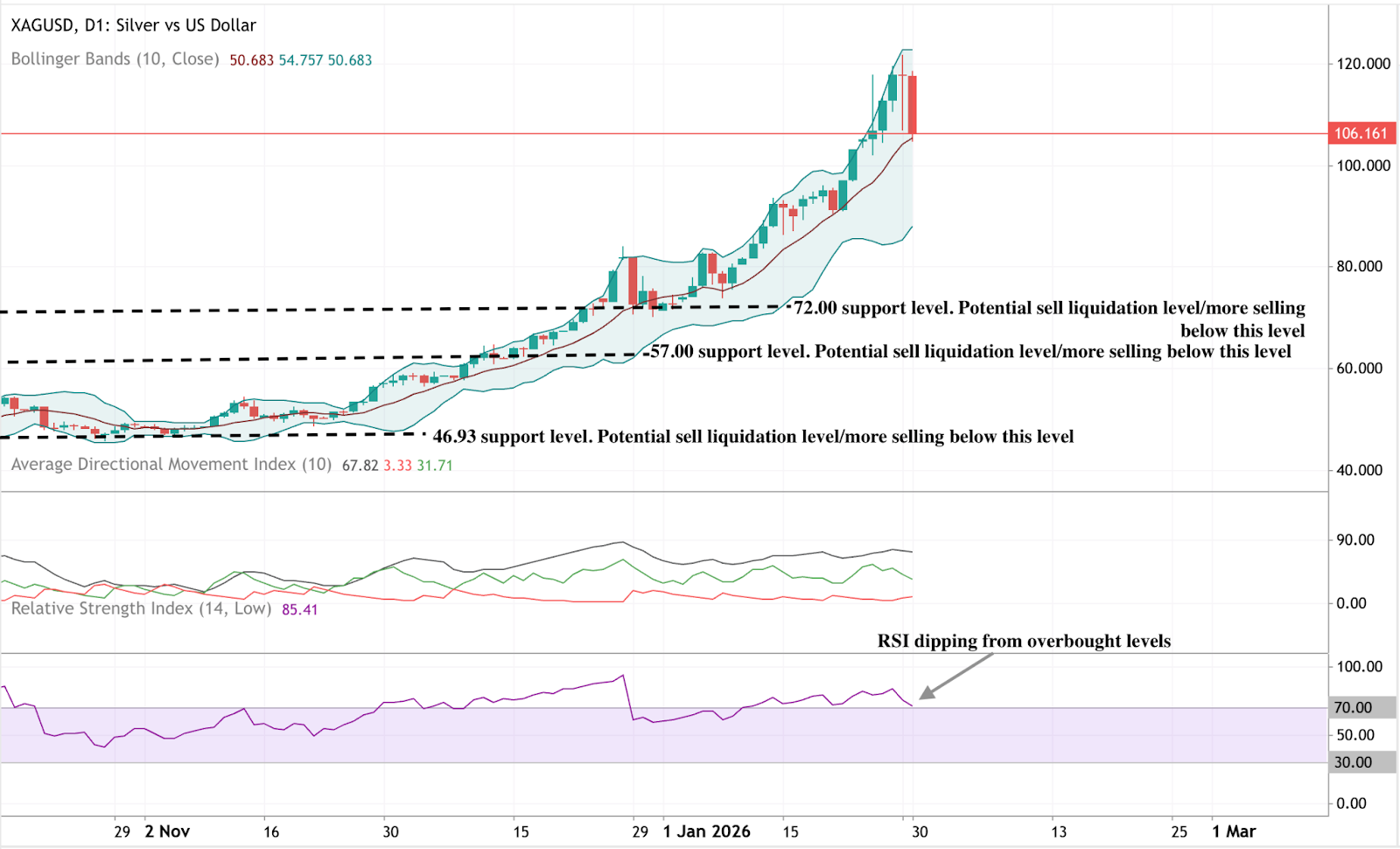
Серебро откатилось от недавних максимумов после резкого роста, цена ушла от верхней полосы Боллинджера, оставаясь в целом в повышенном диапазоне. Несмотря на откат, полосы Боллинджера по-прежнему широко расширены, что указывает на то, что волатильность остаётся высокой по сравнению с предыдущими периодами.
Индикаторы импульса показывают ослабление: RSI опустился из зоны перекупленности, сигнализируя о замедлении восходящего импульса, а не о полном развороте. Сила тренда остаётся выраженной, значения ADX по-прежнему высоки, что указывает на сильную, зрелую трендовую среду. Структурно цена остаётся значительно выше предыдущих зон консолидации около $72, $57 и $46,93, что подчеркивает масштаб предыдущего роста.
Информация, размещённая в блоге Deriv, предназначена исключительно для образовательных целей и не является финансовой или инвестиционной рекомендацией. Информация может устаревать, а некоторые упомянутые продукты или платформы могут больше не предлагаться. Мы рекомендуем проводить собственное исследование перед принятием торговых решений. Приведённые показатели доходности не гарантируют будущих результатов.


