
Lo que la caída de Azure de Microsoft revela sobre el comercio de IA

La “caída” de Azure de Microsoft deja algo muy claro sobre el comercio de IA: los inversores ya no recompensan solo la promesa, quieren rendimientos visibles. Un crecimiento de Azure del 39%, ligeramente por debajo de las expectativas, fue suficiente para desencadenar una venta del 10% y borrar aproximadamente 360 mil millones de dólares en valor de mercado, a pesar de que Microsoft superó las previsiones de ingresos y beneficios.
Esa reacción marca un punto de inflexión. El comercio de IA está pasando del entusiasmo al escrutinio, de la escala a la eficiencia. Para Microsoft, y para Big Tech en general, la pregunta ya no es si existe demanda de IA, sino si el gasto necesario para capturarla puede traducirse en beneficios sostenibles.
¿Qué provocó la caída de Azure de Microsoft?
A simple vista, el desempeño de Azure fue sólido. Los ingresos por la nube crecieron un 39% interanual en el trimestre de diciembre, cómodamente por delante de la mayoría de sus pares en software empresarial. El problema fue el contexto. El crecimiento se desaceleró secuencialmente desde el 40%, y las expectativas para los hyperscalers se han elevado tanto que incluso una desaceleración mínima puede inquietar la confianza.
La dirección atribuyó la caída a limitaciones de capacidad más que a una demanda débil. La CFO Amy Hood dijo que Microsoft priorizó las cargas de trabajo internas de IA y los productos propios sobre la asignación de las nuevas GPU disponibles a los clientes de Azure. Esa decisión puede apoyar la estrategia a largo plazo, pero a corto plazo limitó el crecimiento de la nube, y recordó a los inversores que los cuellos de botella en la infraestructura pueden retrasar los retornos incluso de las inversiones en IA más prometedoras.
Por qué es importante para el comercio de IA
Azure es más que una línea de ingresos; es el principal referente del mercado para medir la monetización de la IA por parte de Microsoft. Cuando el crecimiento de la nube se desacelera, los inversores se preguntan si los gastos de capital récord están generando un retorno adecuado. Microsoft gastó 37.500 millones de dólares en inversiones de capital en el trimestre, en gran parte vinculados a la infraestructura de IA, y la dirección indicó que el gasto elevado continuará.
Ese desequilibrio entre el aumento de costes y el crecimiento limitado es lo que sacudió a los mercados. El analista de KeyBanc, Jackson Ader, dijo que el crecimiento de Azure a tipo de cambio constante decepcionó en relación con las expectativas, mientras que UBS señaló pruebas limitadas de que Microsoft 365 Copilot esté acelerando los ingresos. El mensaje de los inversores es claro: la IA debe empezar a mover la aguja financieramente, no solo estratégicamente.
Impacto en las grandes tecnológicas y el sentimiento del mercado
La venta masiva de Microsoft se extendió al sector tecnológico en general. Las acciones de software cayeron con fuerza, arrastrando al iShares Expanded Tech-Software ETF un 5% a la baja, mientras que el Nasdaq también cerró en negativo.
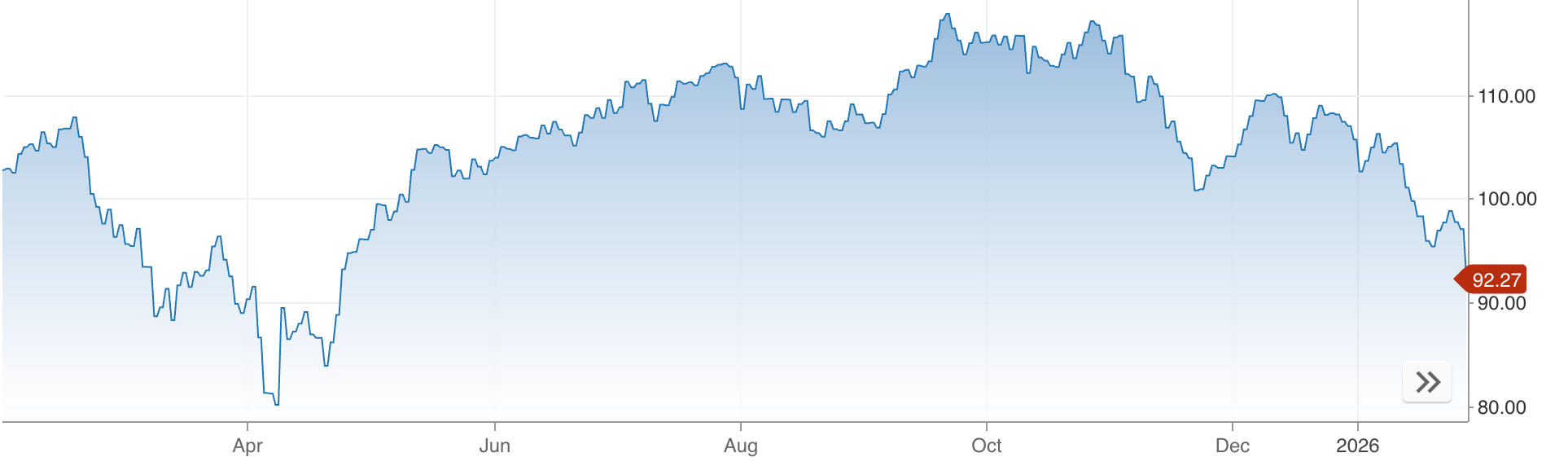
El contraste con el reciente repunte de Meta tras sus resultados subraya una brecha creciente dentro de Big Tech entre las empresas que logran expandir márgenes a corto plazo y aquellas que aún absorben elevados costes de inversión.
La reacción también eleva las expectativas para los próximos resultados de Amazon y Alphabet. Los inversores compararán AWS y Google Cloud directamente con Azure, buscando confirmar si la desaceleración de la nube es específica de la empresa o una consecuencia generalizada de la presión sobre la infraestructura de IA. Cualquier decepción podría reforzar la idea de que el comercio de IA está entrando en una fase más selectiva.
Perspectiva de los expertos: reajuste, no colapso
A pesar de la severidad de la caída, Wall Street no está abandonando a Microsoft. Más del 95% de los analistas siguen recomendando comprar la acción, con precios objetivo promedio que implican un potencial de subida superior al 40% desde los niveles actuales. Bernstein argumentó que la dirección ha priorizado deliberadamente la fortaleza de la plataforma a largo plazo sobre la apariencia a corto plazo de la nube, una compensación que solo podría quedar clara en varios trimestres.
Lo que ha cambiado es la tolerancia. Los inversores están menos dispuestos a dar el beneficio de la duda a los líderes de IA sin avances medibles en márgenes y monetización. Para Microsoft, las próximas señales a vigilar son la expansión de la capacidad de Azure, la adopción de Copilot y si el gasto de capital comienza a estabilizarse. El comercio de IA no está roto, pero está madurando.
Conclusión clave
La caída de Azure de Microsoft no rompió el comercio de IA, lo redefinió. Los mercados ya no valoran el liderazgo en IA solo por la ambición, sino por la ejecución, los márgenes y la disciplina. Microsoft sigue siendo central en la historia de la IA, pero la paciencia se está agotando. La próxima fase del comercio recompensará la ejecución, no solo la escala.
Perspectiva técnica de Microsoft
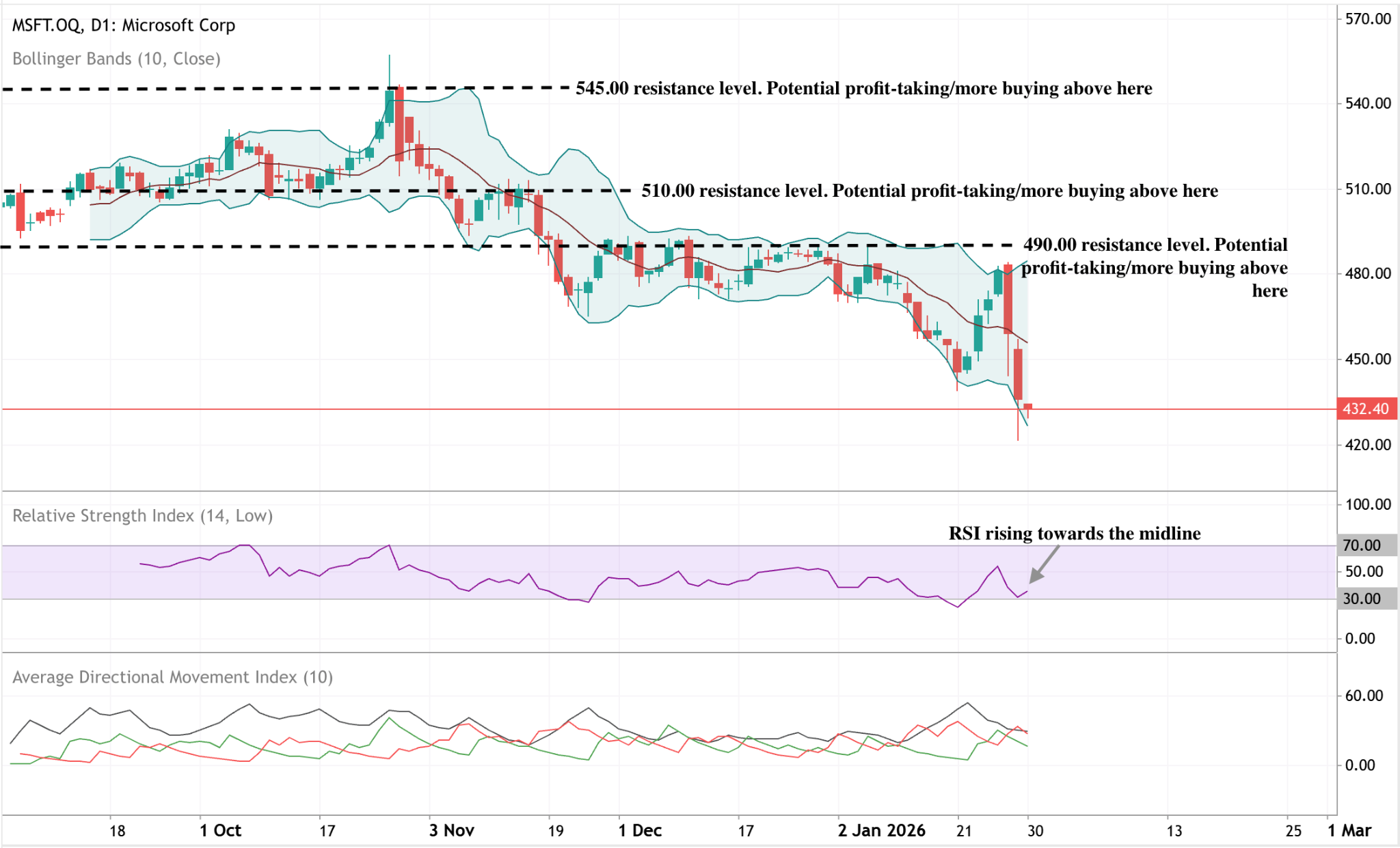
Microsoft ha retrocedido tras no lograr mantener los máximos previos, cotizando por debajo de varias zonas de resistencia anteriores y cerca del extremo inferior de su rango reciente. Bollinger Bands permanecen moderadamente expandidas, lo que indica una volatilidad elevada tras la reciente caída en lugar de un retorno a condiciones estables.
Los indicadores de momentum muestran una estabilización tentativa: el RSI está subiendo hacia la línea media tras lecturas previas más débiles, lo que sugiere una moderación en el impulso bajista sin un cambio direccional claro. La fortaleza de la tendencia parece mixta, con el ADX indicando actividad de tendencia pero sin un dominio direccional fuerte. Estructuralmente, el precio se mantiene por debajo de las antiguas zonas de resistencia en torno a los $490, $510 y $545, destacando una configuración gráfica caracterizada por la consolidación tras una fase correctiva más que por un descubrimiento activo de precios.
La información contenida en el Blog de Deriv es solo para fines educativos y no constituye asesoramiento financiero ni de inversión. La información puede quedar desactualizada y algunos productos o plataformas mencionados pueden dejar de estar disponibles. Recomendamos realizar su propia investigación antes de tomar cualquier decisión de trading. Las cifras de rendimiento citadas no garantizan rendimientos futuros.


