
Is Nvidia’s slide a big opportunity: Why the pullback looks mispriced
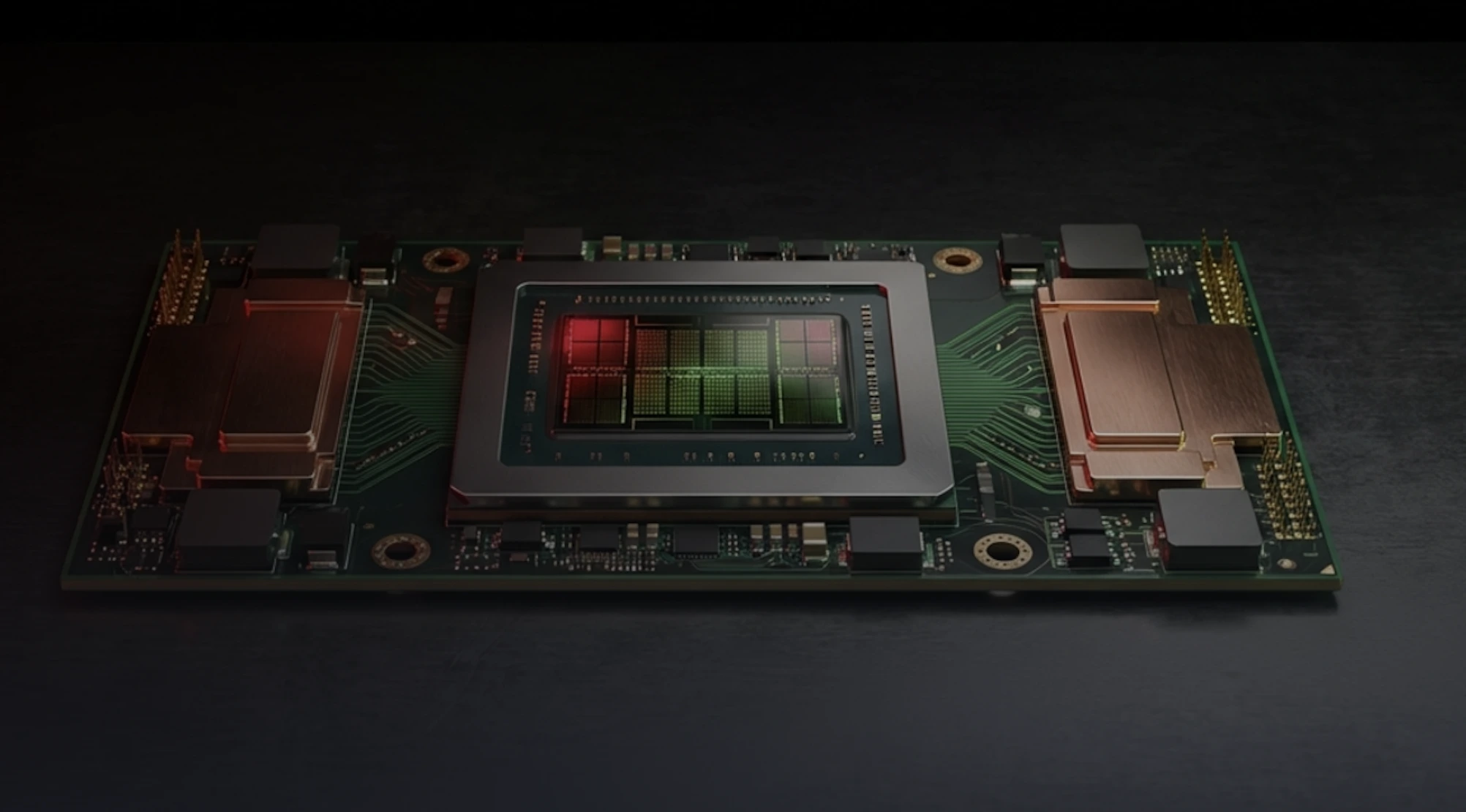
Is Nvidia’s slide a warning shot or the kind of pullback long-term investors dream about? Reports showed, the stock has retreated after a blistering run, even as the company remains valued at roughly $4.6 trillion and continues to push quarterly revenue beyond $55 billion. That disconnect between share price and business performance is at the heart of today’s debate.
Beneath the volatility, Nvidia’s margins remain above 50%, revenue guidance points to higher growth, and fresh policy shifts on H200 exports to China could reopen a lucrative channel for expansion. The real question now is whether markets are overpricing the risks and underpricing the durability of Nvidia’s AI dominance - and that’s where this story begins.
What’s driving Nvidia’s moment?
Nvidia’s latest pullback has been fuelled by a sharp reset in expectations around competition and policy. According to reports, investors are no longer just concerned about AMD; they are also weighing the implications of what would happen if Google were to start selling its internally developed AI chips at scale to outside clients, such as Meta.
OpenAI’s deepening partnership with Broadcom, now worth more than $1.7 trillion, adds another heavyweight rival into the mix. At the same time, Chinese players like Alibaba, SMOC and Moore Threads - the latter jumping more than 500% on its market debut - underline how quickly alternative ecosystems can form.
Yet history suggests Nvidia tends to grow through competition rather than be derailed by it. Revenue has accelerated even as rivals launched credible GPUs, and management expects fourth-quarter revenue to climb towards $65 billion on the back of sustained demand for AI infrastructure.
Concerns about “circular” AI funding - where Nvidia backs start-ups that then buy its chips - sound alarming, but ignore the reinforcing effect of a broad ecosystem built around CUDA, networking hardware and software tools. Many expressed Nvidia’s moat is not just silicon; it is a full stack that keeps developers and data centres anchored to its platform.
Why it matters
The valuation question around Nvidia is, at its core, a debate about the shape of the AI cycle. On headline numbers, the stock does not appear as stretched as its critics suggest: a forward price-to-earnings ratio of around 29.94 compares with a five-year average of nearly 45, while a forward PEG ratio of close to 1.0 sits well below the sector median of around 1.7.
Watchers noted that implies the market is paying less per unit of growth than it has in the past, despite revenue and profit momentum running at historic levels. As one analyst at Gavekal Dragonomics argued, recent US policy shifts reflect “market realities”, with Washington now more focused on competing for AI market share than simply slowing China’s progress.
Politics, however, is shaping the risk premium investors demand. President Donald Trump’s decision to allow Nvidia to export H200 chips to “approved customers” in China has split Washington. Nvidia hailed the policy as a balanced approach that protects high-value US jobs and manufacturing, but senior Democrats branded it a “colossal economic and national security failure”, warning that more powerful chips could supercharge Chinese military and surveillance capabilities.
That clash matters because it reveals how quickly export rules could swing again - a reminder that Nvidia’s earnings outlook is tied to the US–China technology strategy, not just to quarterly demand from cloud providers.
Impact on markets, industry and consumers
According to analysts, the reopening of China, even in a limited way, could be economically significant for Nvidia. The H200 is far more capable than the H20 chip, which was tailored for the Chinese market under earlier Biden-era controls, with think-tank estimates suggesting it delivers several times the performance of the H20 in key AI workloads.
If Chinese firms are allowed - and willing - to buy at scale, Nvidia could unlock billions in pent-up demand from cloud services, internet platforms and AI start-ups waiting for clarity. But Beijing’s desire to reduce dependence on US technology and its encouragement of domestic alternatives mean demand may return in bursts rather than a clean ramp.
For global markets, the decision could signal a shift from blunt export denial to managed competition. Former US officials warn that giving Chinese firms easier access to higher-end chips risks narrowing America’s lead in frontier AI models and enabling Chinese cloud providers to build “good enough” data centres across emerging markets.
That could compress the long-term margins of US tech champions, but, paradoxically, it also reinforces demand for Nvidia’s hardware in the medium term as more regions race to build AI capacity. According to analysts, Nvidia may see stronger near-term revenues even as the strategic landscape becomes more contested.
For end-users and enterprise customers, Nvidia’s continued dominance still shapes pricing and access to computing power. Its net profit margin of about 53% surpasses AMD’s 10% and Micron’s 23%, and its Rule of 40 score above 100% - combining rapid revenue growth with high profitability - is rare even among leading software companies.
Strategic moves, such as a $2 billion investment in Synopsys, alongside positions in AI infrastructure and cloud-linked firms, deepen Nvidia’s grip on the tools used to design and deploy next-generation chips. Even with selective institutional selling, such as Rothschild Investment LLC trimming holdings by 3.5%, the broader flow of capital continues to favour Nvidia’s leadership.
Expert outlook
Where does that leave investors asking whether the pullback is an opportunity or the start of a structural fade? Many analysts still view Nvidia as the backbone of global AI infrastructure for the remainder of the decade, citing its hardware performance, software lock-in, and the pace of its product roadmap.
Jensen Huang’s commitment to invest hundreds of billions of dollars in US-based AI infrastructure reinforces the idea that Nvidia is not merely selling chips but building the physical layer of a new computing era. Should China ultimately approve H200 imports at scale, consensus earnings may prove too conservative again.
The uncertainties lie not in the technology but in politics and competition, experts added. In Washington, cross-party concern about empowering China’s AI capabilities could harden into new legal barriers if the current deal is perceived to backfire, while Beijing may continue encouraging its tech giants to favour domestic chips even when US technology becomes available. Meanwhile, Google, AMD, Broadcom and a growing cohort of Chinese firms are racing to erode Nvidia’s lead. For now, Nvidia’s scale, margins and ecosystem breadth mean the recent slide looks more like a repricing of fear than a verdict on the company’s future.
Key takeaway
Nvidia’s pullback looks less like a reflection of fading fundamentals and more like a recalibration of geopolitical noise, competitive pressure and market expectations. The company continues to deliver exceptional growth, high margins and a software-anchored ecosystem that competitors still struggle to replicate. New export rules add volatility but may also unlock renewed demand, even as they intensify the global AI race. For now, the evidence points to a mispriced slide - with the next decisive signals likely to come from Washington, Beijing and Nvidia’s ability to clear near-term technical resistance.
Technical insights
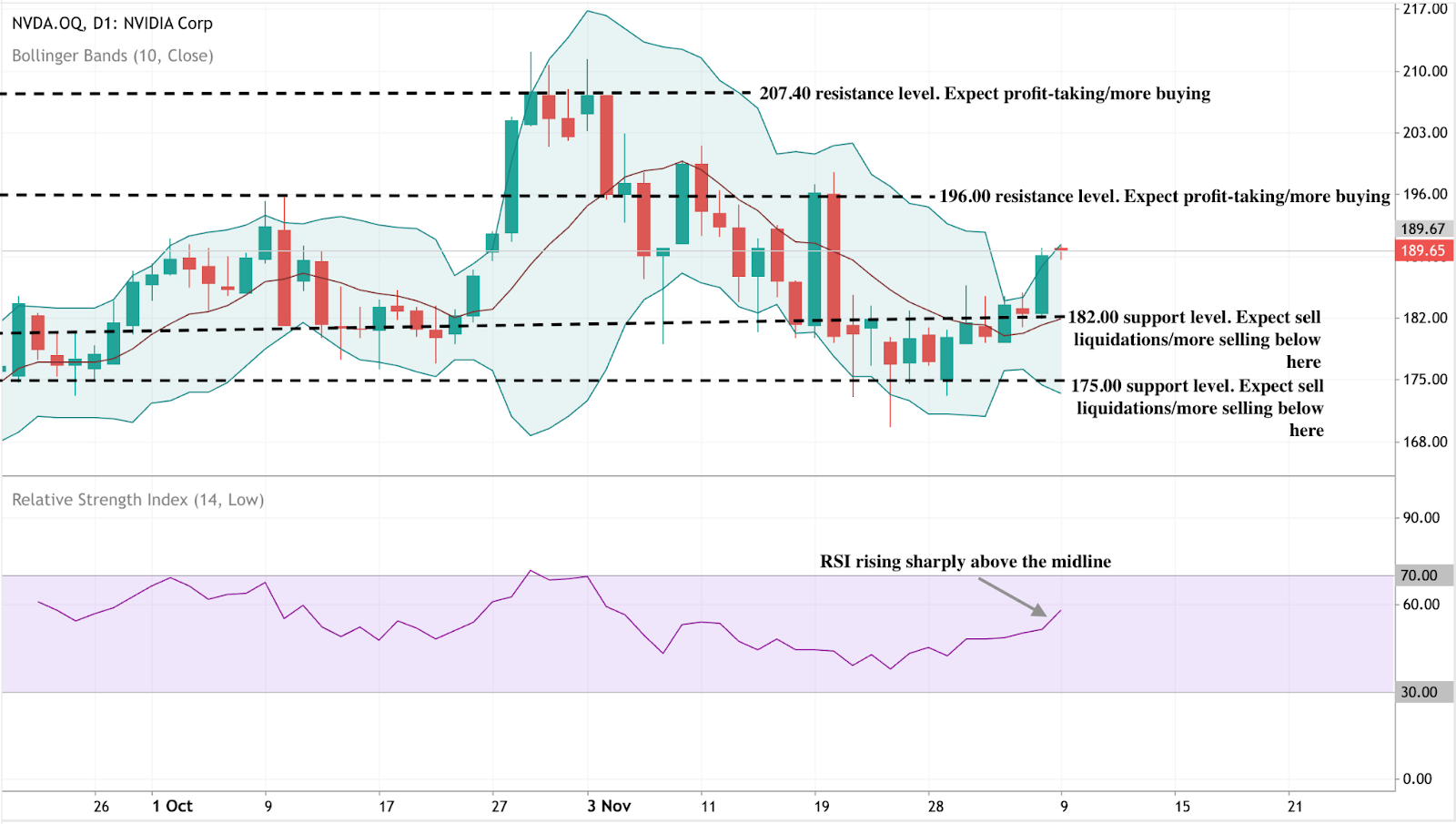
Nvidia is trading around $189.65, extending its rebound after breaking above the short-term range. Price is now edging closer to the $196.00 resistance level, with a heavier barrier at $207.40 where traders often anticipate profit-taking or fresh buying momentum. The downside structure remains important: support at $182.00 and $175.00 now act as critical fail-safes. A break beneath either level could invite forced liquidations and deepen the correction.
Recent movement shows Nvidia drifting back towards the upper half of its Bollinger Band range, a sign that bullish sentiment is reasserting itself after weeks of consolidation. Strong upward candles suggest buyers are regaining control, while the RSI, now climbing above the midline towards 60, confirms strengthening momentum. The indicator remains below overbought territory, leaving room for continued upside - provided the price can clear the nearby resistance zone at $196 with conviction.
The performance figures quoted are not a guarantee of future performance.


