বিথাম্বের $44 বিলিয়ন বিটকয়েন ত্রুটি একটি লুকানো ক্রিপ্টো ঝুঁকি উন্মোচিত করেছে
শুক্রবার সন্ধ্যায় সিউলে, একটি মাত্র কীস্ট্রোক অল্প সময়ের জন্য বিটকয়েনের সবচেয়ে পবিত্র নিয়মগুলোর একটি—দুর্লভতা—পুনর্লিখন করেছিল। দক্ষিণ কোরিয়ার ক্রিপ্টো এক্সচেঞ্জ Bithumb ভুলবশত ব্যবহারকারীদের ৬২০,০০০ বিটকয়েন—যার মূল্য আনুমানিক $44 বিলিয়ন—ক্রেডিট করেছিল, যেখানে আসলে তাদের পাওনা ছিল মাত্র ₩2,000 ($1.40) প্রোমোশনাল রিওয়ার্ড, যার ফলে প্ল্যাটফর্মে মুহূর্তের মধ্যে দাম ১৭% কমে গিয়ে একটি তীব্র কিন্তু স্থানীয় বিক্রির চাপ সৃষ্টি হয়।
যদিও ৩৫ মিনিটের মধ্যে ঘটনাটি উল্টে দেওয়া হয় এবং অন-চেইনে কোনো প্রভাব পড়েনি, এটি কেন্দ্রীভূত এক্সচেঞ্জগুলোর ভেতরে একটি গভীর কাঠামোগত দুর্বলতা উন্মোচিত করেছে। এই ঘটনা ছিল না হ্যাকিং, জালিয়াতি, বা বিটকয়েনের নিজস্ব কোনো সমস্যা। এটি ছিল ব্যবহারকারী ও ব্লকচেইনের মাঝে থাকা ভঙ্গুর স্তর নিয়ে, এবং কেন সেই স্তরটি হতে পারে ক্রিপ্টোর সবচেয়ে অবমূল্যায়িত ঝুঁকি।
বিটকয়েনের গল্পের পেছনে কী?
ঘটনার কেন্দ্রে ছিল একটি সাধারণ মার্কেটিং প্রচারণা, যা মারাত্মকভাবে ভুল হয়ে যায়। Bithumb ৬৯৫ জন ব্যবহারকারীকে ছোট নগদ পুরস্কার বিতরণের পরিকল্পনা করেছিল। পরিবর্তে, একটি অভ্যন্তরীণ স্ক্রিপ্ট প্রত্যেক গ্রাহককে কমপক্ষে ২,০০০ বিটকয়েন ক্রেডিট করে দেয়।
মোট ৬২০,০০০ BTC এক্সচেঞ্জের অভ্যন্তরীণ লেজারে তৈরি হয়—বিটকয়েনের সর্বোচ্চ সরবরাহের প্রায় ৩%—যদিও Bithumb-এর গ্রাহক ও কর্পোরেট রিজার্ভে ছিল ৪৩,০০০ BTC-রও কম।
গুরুত্বপূর্ণভাবে, এই বিটকয়েনগুলো কখনোই ব্লকচেইনে ছিল না। এগুলো ছিল অভ্যন্তরীণ হিসাবরক্ষণ ব্যবস্থার তৈরি ফ্যান্টম ব্যালেন্স, যা প্রকৃত রিজার্ভের সাথে পুরস্কার যাচাই করতে ব্যর্থ হয়েছিল। ট্রেডিং ইঞ্জিন এগুলোকে বাস্তব হিসেবে গণ্য করে, ব্যবহারকারীদের অর্ডারবুকে বিক্রি করার সুযোগ দেয়। ট্রেডিং বন্ধ হওয়ার আগে আনুমানিক ১,৭৮৬ BTC বিক্রি হয়ে যায়, অল্প সময়ের জন্য Bithumb-এ দাম ভেঙে পড়ে, যদিও বৈশ্বিক বাজারে কোনো প্রভাব পড়েনি।
কেন এটি গুরুত্বপূর্ণ
অনেক পর্যবেক্ষকের কাছে, শিরোনামটি ছিল প্রায়-FTX মুহূর্তের মতো। আসলে তা ছিল না। Bithumb একই দিনে ৯৯.৭% ক্রেডিটকৃত সম্পদ পুনরুদ্ধার করে এবং বাকি ক্ষতি কর্পোরেট তহবিল থেকে কভার করার অঙ্গীকার করে, যার মধ্যে ক্ষতিগ্রস্ত ট্রেডারদের জন্য ১০% অতিরিক্ত ক্ষতিপূরণও ছিল।
কোনো সলভেন্সি সংকট ছিল না, গ্রাহকের তহবিলের অপব্যবহার ছিল না, এবং রিজার্ভের কোনো অন-চেইন স্থানান্তরও হয়নি। তবে নিয়ন্ত্রকরা অন্য কিছুর দিকে মনোযোগ দেন। দক্ষিণ কোরিয়ার Financial Services Commission জানায়, এই ঘটনা “ভার্চুয়াল অ্যাসেটের দুর্বলতা ও ঝুঁকি উন্মোচিত করেছে,” এবং দেশীয় এক্সচেঞ্জগুলোর অভ্যন্তরীণ নিয়ন্ত্রণ ব্যবস্থা পর্যালোচনার ঘোষণা দেয়। আইনপ্রণেতা Na Kyung-won আরও সরাসরি বলেন, ব্লকচেইন সেটেলমেন্ট ছাড়া কেবল অভ্যন্তরীণ হিসাব পরিবর্তন করা এক্সচেঞ্জগুলো “মূলত এমন কয়েন বিক্রি করছে, যা তাদের কাছে নেই।”
ক্রিপ্টো বাজার ও এক্সচেঞ্জের প্রতি আস্থার ওপর প্রভাব
তাৎক্ষণিক বাজার প্রভাব সীমিত ছিল, তবে কাঠামোগত ইঙ্গিতগুলো বৈশ্বিক। প্রতিটি কেন্দ্রীভূত এক্সচেঞ্জ একই নীতিতে চলে: গ্রাহকের ব্যালেন্স উইথড্র করার আগ পর্যন্ত কেবল ডাটাবেস এন্ট্রি। Bithumb-এর ত্রুটি দেখিয়েছে, শক্তিশালী অপারেশনাল কন্ট্রোল না থাকলে, এই ডাটাবেসগুলোতে অনায়াসেই অস্তিত্বহীন সম্পদ দেখানো যেতে পারে।
এটি দক্ষিণ কোরিয়ায় নতুন কিছু নয়। ২০১৮ সালে, Samsung Securities অনুরূপ একটি সংখ্যাগত ত্রুটির কারণে ২.৮১ বিলিয়ন ভূত শেয়ার ইস্যু করেছিল, যা জাতীয় সেটেলমেন্ট সিস্টেমে প্রবেশের পর দীর্ঘস্থায়ী সুনাম ও আর্থিক ক্ষতি ডেকে আনে। পার্থক্য ছিল, এবার ঘটনাটি সীমাবদ্ধ ছিল। Bithumb-এর ফ্যান্টম বিটকয়েন কখনোই ব্লকচেইনে যায়নি, ফলে এক্সচেঞ্জ একতরফাভাবে লেনদেন উল্টে দিতে পেরেছে, সিস্টেমিক সংক্রমণ শুরু হওয়ার আগেই।
বিশেষজ্ঞদের দৃষ্টিভঙ্গি
বিশ্লেষকরা ব্যাপকভাবে একমত, এটি বিটকয়েনের ব্যর্থতা নয়, বরং এক্সচেঞ্জ ডিজাইনের ব্যর্থতা। CryptoQuant-এর অন-চেইন ডেটা কোনো অস্বাভাবিক রিজার্ভ মুভমেন্ট দেখায়নি, যা নিশ্চিত করে বিটকয়েনের সরবরাহ ব্যবস্থাপনা অক্ষুণ্ণ ছিল। “ব্লকচেইন ঠিক যেভাবে ডিজাইন করা হয়েছে, সেভাবেই কাজ করেছে—কিছুই করেনি,” মন্তব্য করেন সিউল-ভিত্তিক এক ডিজিটাল asset বিশ্লেষক, যিনি দুর্বল অভ্যন্তরীণ যাচাইকরণ স্তরের দিকে ইঙ্গিত করেন।
আগামী দিনে, আরও কঠোর নিয়ন্ত্রক নজরদারি অনিবার্য বলে মনে হচ্ছে। দক্ষিণ কোরিয়ার নিয়ন্ত্রকরা ইতিমধ্যে জানিয়েছেন, ভবিষ্যতে আরও দুর্বলতা ধরা পড়লে অন-সাইট পরিদর্শন করা হবে। বিনিয়োগকারীদের জন্য, শিক্ষা মূলত মূল্য ওঠানামা নয়, বরং কাউন্টারপার্টি ঝুঁকি নিয়ে। এক্সচেঞ্জ ব্যালেন্স ও বাস্তব বিটকয়েনের মধ্যে ব্যবধান অনেকের ধারণার চেয়ে অনেক পাতলা, এবং শুক্রবারের ত্রুটি সেই ব্যবধানকে দৃশ্যমান করেছে।
মূল বার্তা
Bithumb বিটকয়েন ভাঙেনি—এটি ব্যবহারকারী ও ব্লকচেইনের মাঝে থাকা ভঙ্গুর হিসাবরক্ষণ স্তরটি উন্মোচিত করেছে। এই ঘটনা দেখিয়েছে, অভ্যন্তরীণ নিয়ন্ত্রণ ব্যর্থ হলে কীভাবে সহজেই ফ্যান্টম অ্যাসেট লাইভ মার্কেটে প্রবেশ করতে পারে। ক্ষতি সীমিত থাকলেও, শিক্ষা সর্বজনীন। ক্রিপ্টো গ্রহণ বাড়ার সাথে সাথে, সবচেয়ে বড় ঝুঁকি হয়তো আর অন-চেইনে নেই, বরং তার ওপর নির্মিত সিস্টেমগুলোতে। বিনিয়োগকারীদের উচিত নিয়ন্ত্রক ও এক্সচেঞ্জগুলোর পরবর্তী পদক্ষেপ পর্যবেক্ষণ করা।
বিটকয়েনের টেকনিক্যাল আউটলুক
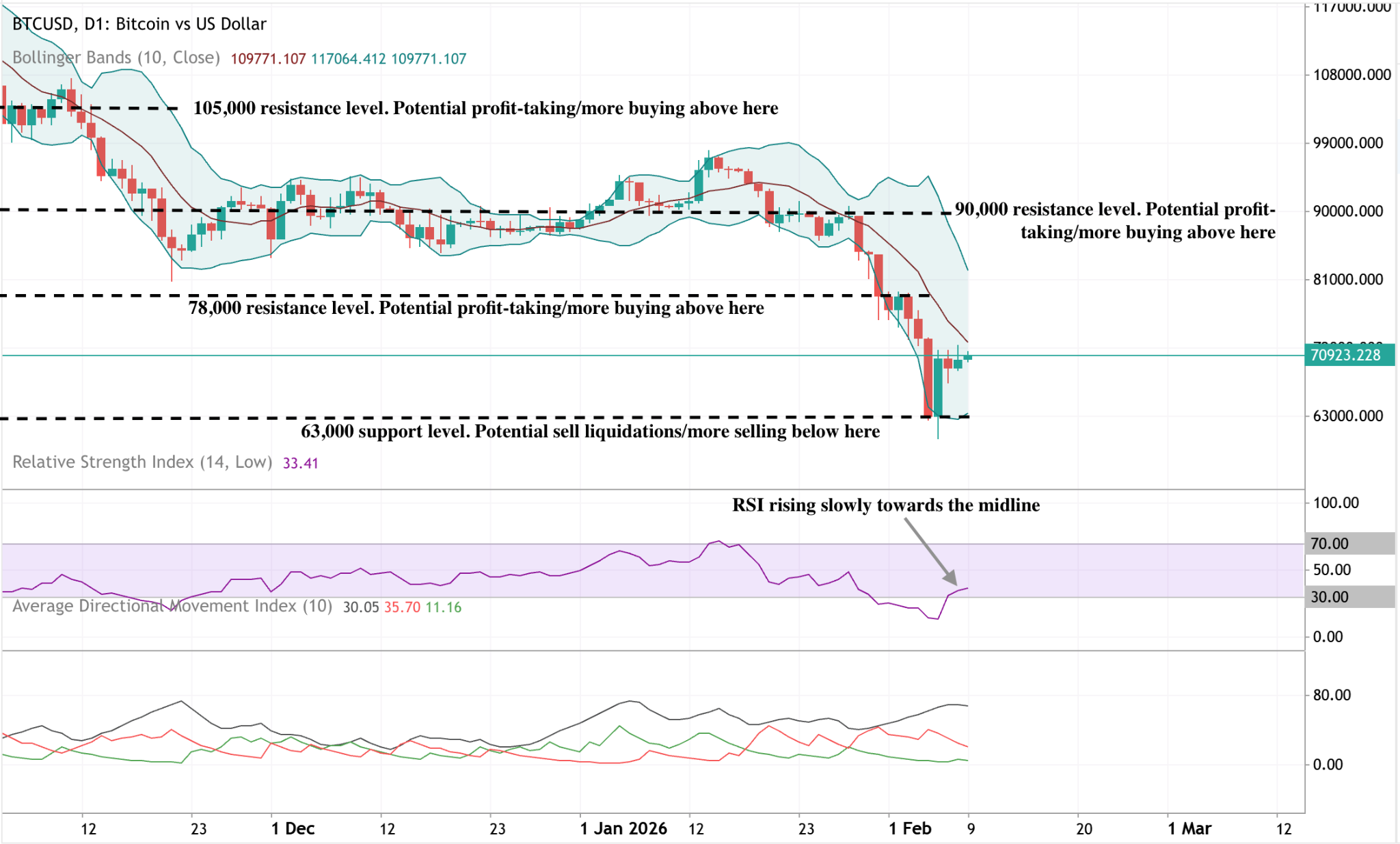
তীব্র পতনের পর বিটকয়েন কিছুটা পুনরুদ্ধার করেছে, দাম সাম্প্রতিক নিম্ন $63,000-র ওপরে স্থিতিশীল হয়েছে এবং আবারও তার সাম্প্রতিক রেঞ্জের নিম্ন-মধ্যভাগের দিকে অগ্রসর হচ্ছে। Bollinger Bands এখনও ব্যাপকভাবে বিস্তৃত, যা নির্দেশ করে volatility এখনও বেশি, সাম্প্রতিক নিম্নমুখী গতি সত্ত্বেও, যদিও দাম আবার ব্যান্ডের ভেতরে ফিরে এসেছে।
Momentum সূচকগুলো চরম অবস্থান থেকে আংশিক পুনরুদ্ধার দেখাচ্ছে: RSI ওভারসোল্ড অঞ্চল থেকে বেড়েছে এবং এখন ধীরে ধীরে মিডলাইনের দিকে অগ্রসর হচ্ছে, যা নিম্নমুখী গতির শ্লথতা নির্দেশ করে, শক্তিশালী ঊর্ধ্বমুখী চাপের পরিবর্তে।
ট্রেন্ডের শক্তি মাঝামাঝি পর্যায়ে রয়েছে, ADX রিডিং বিক্রির সময়ের তুলনায় কম, যা শক্তিশালী দিকনির্দেশনামূলক গতি থেকে কনসোলিডেশনের দিকে পরিবর্তন নির্দেশ করে। কাঠামোগতভাবে, দাম এখনও $78,000, $90,000, এবং $105,000-র আগের রেজিস্ট্যান্স জোনের নিচে রয়েছে, যা ইঙ্গিত দেয় সামগ্রিক কাঠামো এখনও আগের ব্রেকডাউনের দ্বারা প্রভাবিত, নতুন মূল্য আবিষ্কারের পরিবর্তে।