Why Silver is falling after hitting an all-time high

January 16, 2026
Surreal illustration of a metallic silver wave frozen mid-curl, dripping molten metal onto a dark surface.

Silver is falling because the conditions that drove it to record highs have shifted. After surging to an all-time peak near $93.90 earlier in the week, spot silver retreated more than 2% during Friday’s Asian session, trading around $90.40 an ounce.. The move marked a decisive pause in one of the strongest rallies seen across the commodities market this year.

The pullback reflects a combination of easing trade-related supply fears, delayed expectations for US interest rate cuts, and a cooling in geopolitical risk. Together, these factors have stripped away the short-term premium that fuelled silver’s surge, even as longer-term structural demand remains intact.

What’s driving Silver?

The most immediate catalyst behind silver’s decline was a shift in US trade policy. President Donald Trump ordered US trade officials to enter negotiations with key partners rather than impose immediate tariffs on imports of critical minerals. That decision directly removed a supply-side risk that had been aggressively priced into silver earlier in the week.

Silver’s reaction highlights its dual role in global markets. As both a precious metal and a key industrial input used in electronics, renewable energy, and advanced manufacturing, silver is acutely sensitive to supply-chain expectations. When tariff risks faded, the scarcity premium embedded in prices unwound quickly, prompting a wave of profit-taking after the metal’s run to record highs.

Why it matters

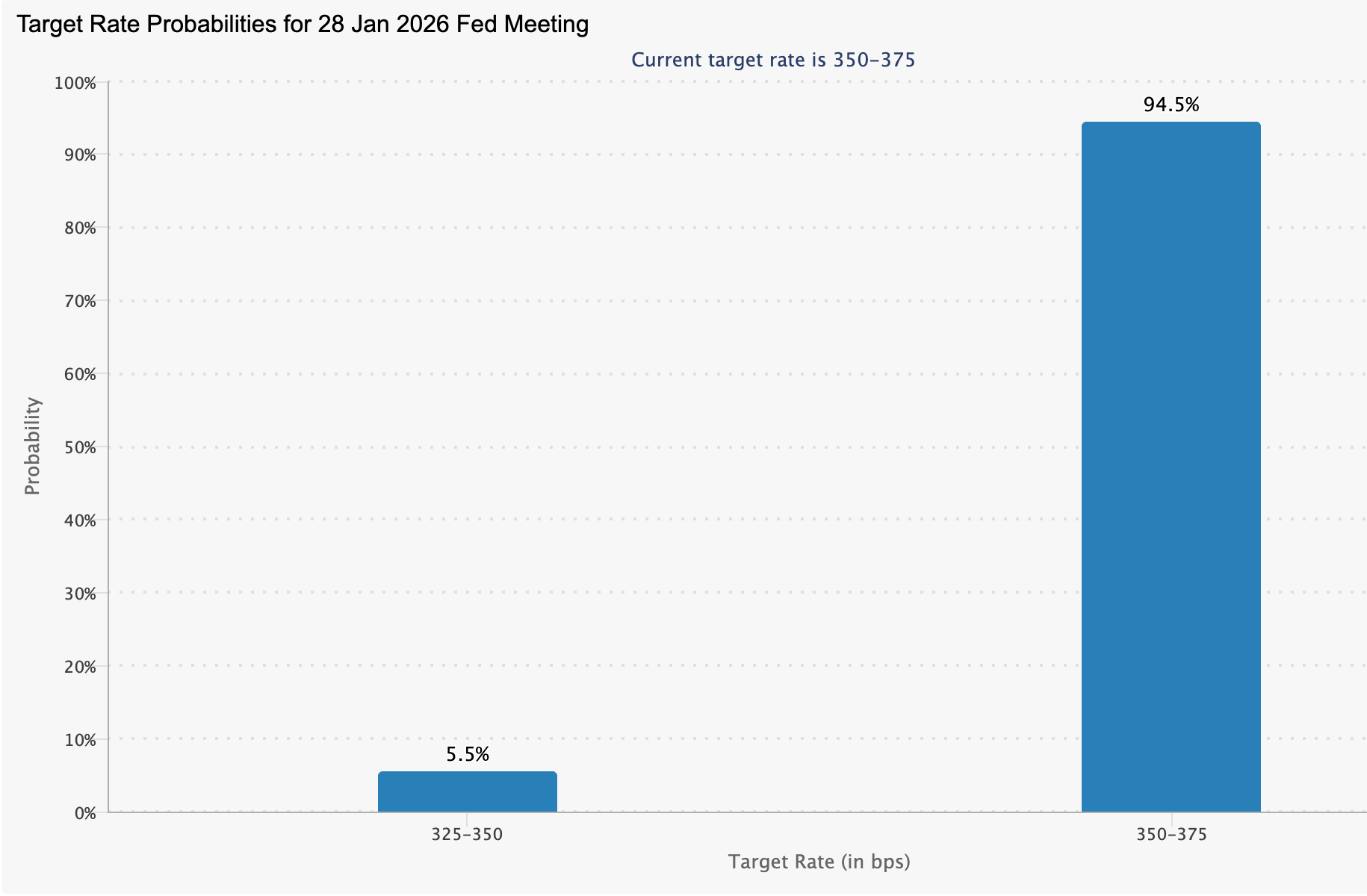
Monetary policy has added a second layer of pressure. Markets are now almost fully priced for the Federal Reserve to hold interest rates steady at its January meeting, with CME FedWatch indicating roughly a 95% probability of no change. 

Bar chart showing market-implied target rate probabilities for the 28 January 2026 Federal Reserve meeting. 
Source: CME

Expectations for the first rate cut have been pushed back to June as inflation data remains sticky.

That backdrop weighs on silver’s near-term appeal. As a non-yielding asset, it becomes less attractive when interest rates stay elevated, and the US dollar strengthens. 

Rahul Kalantri, Vice-President of Commodities at Mehta Equities, noted that recent US macroeconomic data has lifted the dollar to multi-week highs, creating headwinds for bullion prices despite strong underlying demand.

Impact on precious metals markets

Silver’s retreat has echoed across the broader precious metals complex. Gold futures for February delivery fell 0.55% to $4,611 an ounce, while spot gold slipped to around $4,604.52. Platinum and palladium also moved lower, reflecting broad-based profit-taking rather than isolated weakness in silver.

Geopolitical sentiment has also played a role. President Trump’s less confrontational tone on Iran reduced immediate safe-haven demand, improving risk appetite across equity markets. Asian stock indices traded mostly higher, tracking Wall Street’s positive tone, while gold extended losses toward $4,590 as defensive positioning unwound. Silver, which often tracks gold during shifts in risk sentiment, followed suit.

Expert outlook

Despite the short-term correction, silver’s fundamentals remain supportive in the long term. The US has openly acknowledged that it lacks sufficient domestic capacity to meet demand for critical minerals, reinforcing silver’s strategic role across multiple industries. That structural backdrop continues to underpin longer-term optimism, even as prices digest recent gains.

For now, silver appears firmly driven by macro signals. Federal Reserve communication, movements in the US dollar, and any renewed geopolitical tension will likely determine whether the metal stabilises or extends its correction. Until clearer signals emerge, consolidation below recent highs looks more probable than a decisive trend reversal.

Key takeaway

Silver is falling because the short-term forces that pushed it to record highs have shifted. Easing tariff risks, delayed rate-cut expectations, and improving risk sentiment have reduced the immediate price premium. Even so, strong industrial demand and strategic relevance continue to underpin the broader trend. The next decisive move will depend on macro policy signals and global risk dynamics.

Technical perspective: Momentum beneath the pullback

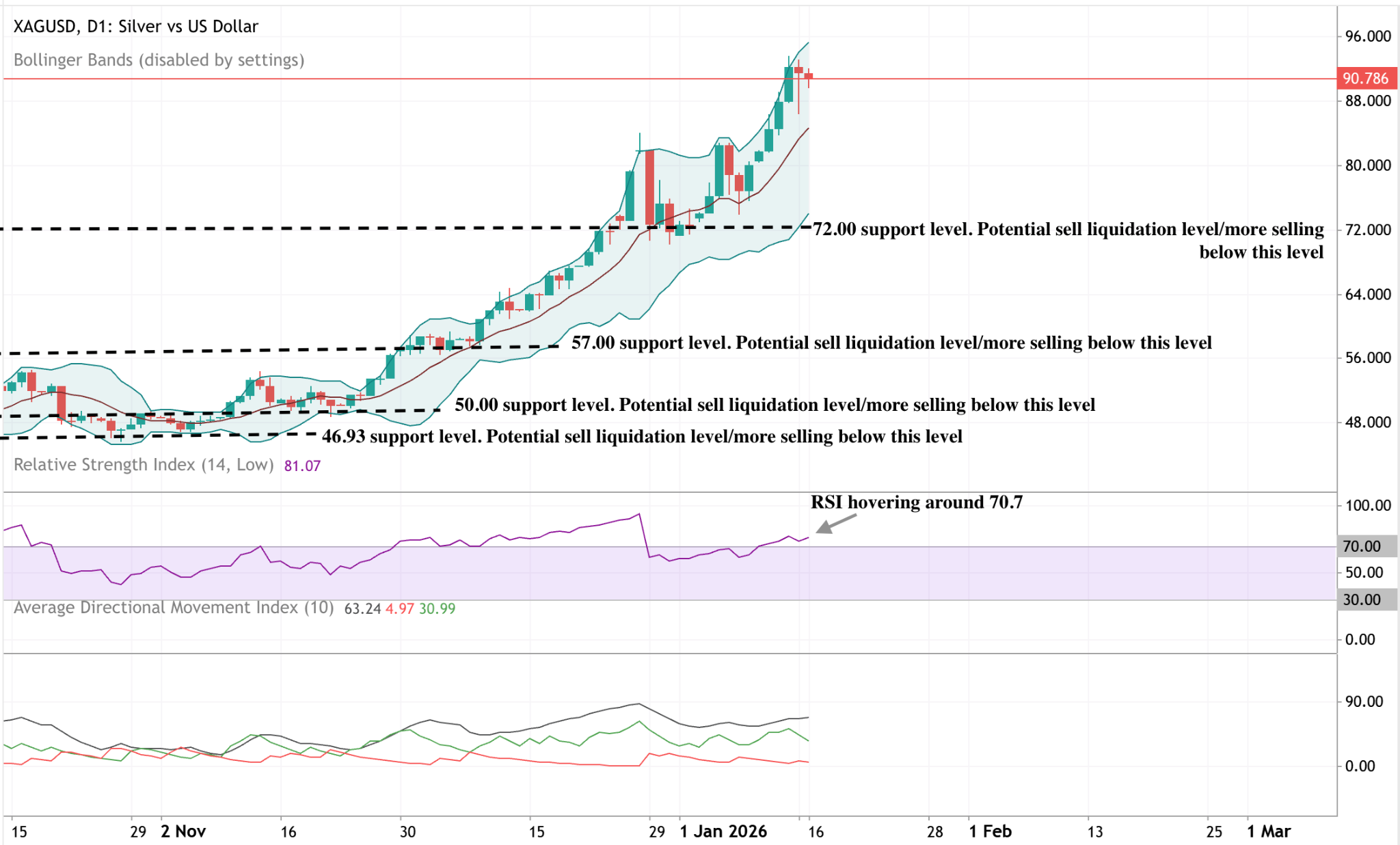
From a technical perspective, silver continues to display unusually strong momentum beneath the surface of the pullback. 

Daily momentum indicators are elevated, with the 14-day relative strength index hovering around 70.7, a level commonly associated with overbought conditions following sharp rallies.

Trend strength remains notable. The average directional index stands at 51.18, a historically high reading that reflects an exceptionally strong directional move rather than a loss of underlying momentum.  

Daily candlestick chart of silver versus the US dollar (XAG/USD). Silver has rallied sharply to around 90.8, pulling back slightly from recent highs.
Source: Deriv MT5

The information contained on the Deriv Blog is for educational purposes only and is not intended as financial or investment advice. The information may become outdated, and some products or platforms mentioned may no longer be offered. We recommend you do your own research before making any trading decisions.

常見問題

No items found.
內容