
Nvidia-ning 'DRIVE' yutug'i Tesla uchun halokatli bo'lishi mumkinmi?
.jpeg)
Qisqasi, yo'q, tahlilchilarga ko'ra, ammo bu Tesla-ning eng kuchli investitsiya rivoyatlaridan birini zaiflashtiradi.
Nvidia-ning kengaytirilgan DRIVE platformasi Tesla-ni avtonom haydashda to'satdan ahamiyatsiz qilib qo'ymaydi, shuningdek, yillab to'plangan xususiy ma'lumotlar va dasturiy ta'minot ishlanmalarini o'chirib tashlamaydi. U nima qiladi: to'liq avtonomiyaga kirish to'siqlarini pasaytiradi va raqobatchi avtomobil ishlab chiqaruvchilarga bir vaqtlar takrorlash juda qiyin bo'lib tuyulgan o'zi yuradigan vositalarga tezroq va arzonroq kirish imkonini beradi.
Bu farq muhim, chunki Tesla-ning bahosi joriy avtomobil savdosidan ko'ra ko'proq kelajakdagi avtonomiyaga tayanadi, savdo esa 2025-yilda 8,5 foizga tushdi. Nvidia-ning CES 2026 e'loni bahsni qayta shakllantiradi: avtonomiya hali ham transport kelajagini belgilashi mumkin, ammo u endi yagona g'olib poygasi kabi ko'rinmaydi. Investorlar uchun savol avtonomiya keladimi-yo'qmi deganidan, uni kim birinchi bo'lib monetizatsiya qiladi deganiga o'zgarmoqda.
Nvidia-ning avtonom haydashga intilishiga nima turtki bo'lmoqda?
Nvidia-ning avtonom tizimlarga o'tishi uning asosiy biznesidan chalg'ish emas. Bu sun'iy intellektni ma'lumotlar markazlaridan tashqariga va mashinalar noaniqlikni real vaqtda talqin qilishi kerak bo'lgan jismoniy muhitga qasddan kengaytirishdir.
2025-moliya yilida Nvidia asosan AI infratuzilmasidan 115,2 milliard dollar ma'lumotlar markazi daromadini yaratdi, bu esa amaliy avtonomiyaga katta sarmoya kiritish uchun ko'lam va kapitalni ta'minladi. CES 2026 ko'rgazmasida Nvidia Alpamayo modellari oilasiga asoslangan DRIVE platformasining yirik yangilanishini taqdim etdi. Asosan naqshni aniqlashga tayangan oldingi avtonom tizimlardan farqli o'laroq, Alpamayo fikrlashga asoslangan qaror qabul qilishga qaratilgan.
Bu o'zgarish sanoatning eng qiyin muammolaridan birini nishonga oladi: xavfsizlikka tez-tez putur yetkazadigan kamdan-kam uchraydigan, oldindan aytib bo'lmaydigan "long tail" hodisalar. Katta, ochiq ma'lumotlar to'plamlarini AlpaSim kabi simulyatsiya vositalari bilan birlashtirish orqali Nvidia Tesla-ning o'n yillik ma'lumotlar ustunligiga ega bo'lmagan ishlab chiqaruvchilar uchun rivojlanish muddatlarini qisqartirishni maqsad qilgan.
Nima uchun bu Tesla-ning avtonomiya rivoyati uchun muhim
Tesla-ning investitsiya holati asta-sekin avtomobillardan dasturiy ta'minotga asoslangan avtonomiyaga burildi. Avtomobil savdosi pasayganiga qaramay, Tesla aksiyalari 2025-yilda yangi cho'qqilarga ko'tarildi, chunki investorlar Cybercab robotaksisi va avtonom taksi xizmatlarining kelajakdagi qiymatini hisobga olishdi. Ark Invest 2029-yilga kelib robotaksilardan yillik 756 milliard dollar daromad olishni prognoz qildi, bu raqam Tesla-ning hozirgi daromad bazasidan ancha katta.
Muammo vaqtda. Tesla-ning Cybercab-i 2026-yil apreligacha ommaviy ishlab chiqarishga kirishi kutilmayapti va uning Full Self-Driving dasturiy ta'minoti Qo'shma Shtatlarda nazoratsiz foydalanish uchun tasdiqlanmaganligicha qolmoqda. Tartibga soluvchi ruxsatnomaning har qanday kechikishi kutilmalar va ijro o'rtasidagi bo'shliqni kengaytirish xavfini tug'diradi. Nvidia-ning e'loni Tesla-ning yo'lini to'smaydi, ammo u investorlar siljishlarga eng kam toqat qiladigan paytda bu yo'lni yanada tirband qiladi.
Avtonom transport vositalari bozoriga ta'siri
Nvidia-ning kengaytirilgan DRIVE ekotizimi raqobatchilarning keng maydonini mustahkamlaydi. Global avtomobil ishlab chiqaruvchilar, jumladan Toyota, Mercedes-Benz, Volvo, Hyundai, Jaguar Land Rover va boshqalar o'zlarining avtonom transport dasturlarini tezlashtirish uchun allaqachon Nvidia-ning apparat va dasturiy ta'minotiga tayanmoqdalar. Fikrlashga asoslangan AI vositalarining qo'shilishi rivojlanish xarajatlarini kamaytiradi va vaqt jadvallarini siqib chiqaradi, bu esa o'rnatilgan ishlab chiqaruvchilarga Tesla-ning sezilarli yetakchiligiga qarshi chiqish imkonini beradi.
Ayni paytda, Alphabet-ning Waymo kompaniyasi o'zining operatsion ustunligini kengaytirishda davom etmoqda. Waymo hozirda AQShning beshta shahrida har hafta 450 000 dan ortiq pullik avtonom taksi qatnovlarini amalga oshirmoqda, bu esa kam sonli raqobatchilar tenglasha oladigan real dunyo ma'lumotlari va tartibga soluvchi ishonchini yaratmoqda. Tesla-ning Cybercab-i xizmatga kirganda, u yangi bozorni kashf etmaydi, balki allaqachon o'rnatilgan bozorda yetib olishga harakat qiladi.
Ekspert qarashi: shov-shuv va ijro
Bozorning Nvidia-ning CES e'loniga munosabati tez bo'ldi, ba'zi investorlar buni avtonom haydash uchun hal qiluvchi lahza deb talqin qilishdi. Biroq, Morgan Stanley ehtiyotkorlikka chaqirdi. Bank yangi vositalar avtomatik ravishda tijorat ustunligiga aylanmasligini ta'kidlab, buning o'rniga integratsiya, tasdiqlash va xarajatlarni nazorat qilishni haqiqiy farqlovchilar sifatida ko'rsatdi.
Tahlilchi Andrew Percoco ta'kidlashicha, avtonomiya yagona mahsulot sikli emas, balki ko'p yillik ijro muammosi bo'lib qolmoqda. Nvidia asosiy vositalarni yetkazib berishi mumkin, ammo ishlab chiqaruvchilar baribir xavfsizlikni miqyosda isbotlashlari va tartibga soluvchi ruxsatnomani olishlari kerak. Hal qiluvchi bosqich 2026-yilda, Nvidia hamkorlari joylashtirishga urinib ko'rganda va Tesla va'dadan pullik xizmatga o'tishga intilganda boshlanadi.
Asosiy xulosa
Nvidia-ning DRIVE kengayishi Tesla uchun halokatni anglatmaydi, ammo u avtonomiya Tesla-ning eksklyuziv mukofoti ekanligi haqidagi g'oyaga putur yetkazadi. O'zi yuradigan rivojlanishning narxi va murakkabligini pasaytirish orqali Nvidia raqobat muhitini hal qiluvchi pallada qayta shakllantirmoqda. Kelgusi yil Tesla raqobatchilar bo'shliqni yopishdan oldin o'z qarashlarini daromadga aylantira oladimi yoki yo'qligini aniqlaydi. Bozorlar uchun endi ijro ambitsiyadan ko'ra muhimroqdir.
Tesla texnik prognozi
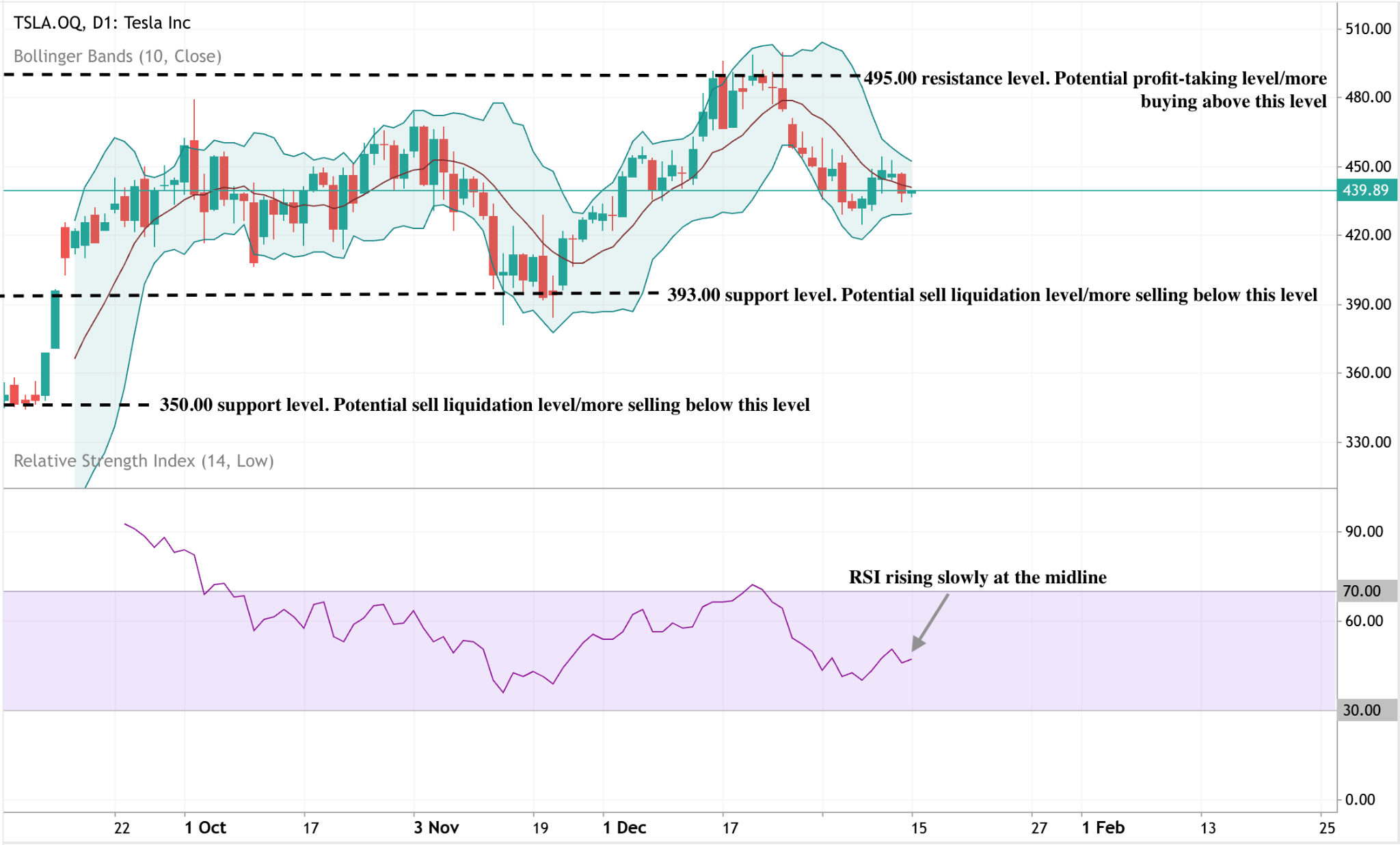
Tesla so'nggi yuqori ko'rsatkichlardan keskin rad etilgandan so'ng 495 dollar darajasidan pastda konsolidatsiyalanmoqda, narx esa so'nggi diapazonning o'rtasiga qaytmoqda. Bollinger Bands kengayish davridan keyin qisqarishni boshlamoqda, bu esa oldingi yo'nalishli harakatdan keyin o'zgaruvchanlikning sekinlashishini bildiradi. Bu momentum sharoitlarining tezlashish o'rniga barqarorlashayotganiga mos keladi.
RSI o'rta chiziq atrofida aylanib yuribdi, bu esa oldingi ko'tarilish soviganidan keyin neytral momentum profilini aks ettiradi. Umuman olganda, narx harakati yangilangan yo'nalishli turtki o'rniga kengroq diapazonda to'xtashni taklif qiladi, bozor ishtirokchilari muvaffaqiyatsiz yuqori kengayishdan keyin momentumni qayta baholamoqdalar. Ushbu texnik sharoitlarni Deriv MT5 dagi ilg'or grafik vositalari yordamida real vaqtda kuzatish mumkin, bu yerda treyderlar global bozorlar bo'ylab narx harakati, o'zgaruvchanlik va momentumni tahlil qilishlari mumkin.
Deriv Blog-dagi ma'lumotlar faqat ta'lim maqsadlari uchun mo'ljallangan va moliyaviy yoki investitsiya maslahati sifatida ko'rilmasligi kerak. Ma'lumotlar eskirishi mumkin va tilga olingan ba'zi mahsulotlar yoki platformalar endi taklif qilinmasligi mumkin. Har qanday savdo qarorini qabul qilishdan oldin o'z tadqiqotingizni o'tkazishni tavsiya qilamiz. Keltirilgan ishlash ko'rsatkichlari kelajakdagi natijalarning kafolati emas.


